

locality
San Vito Lo Capo

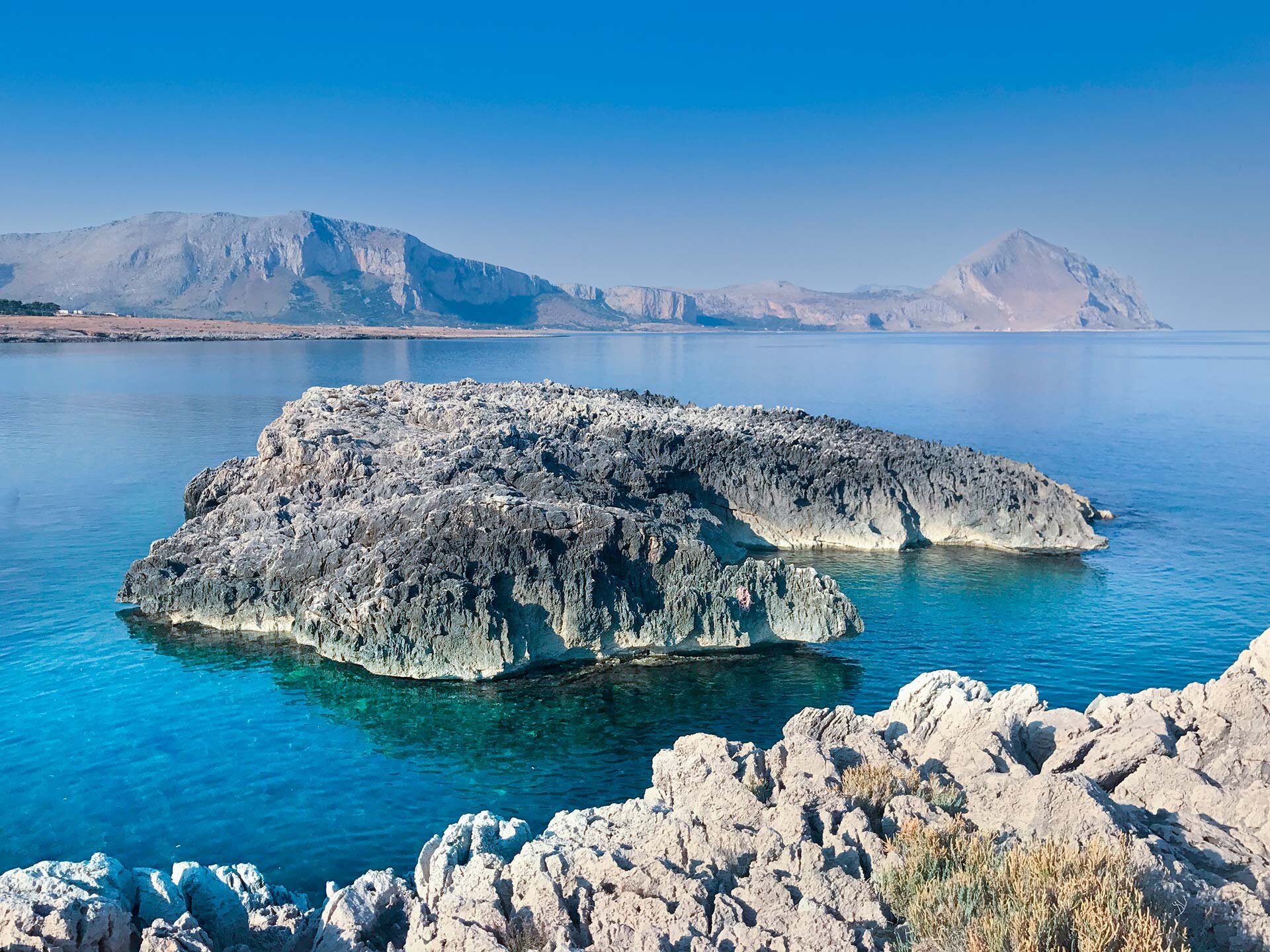
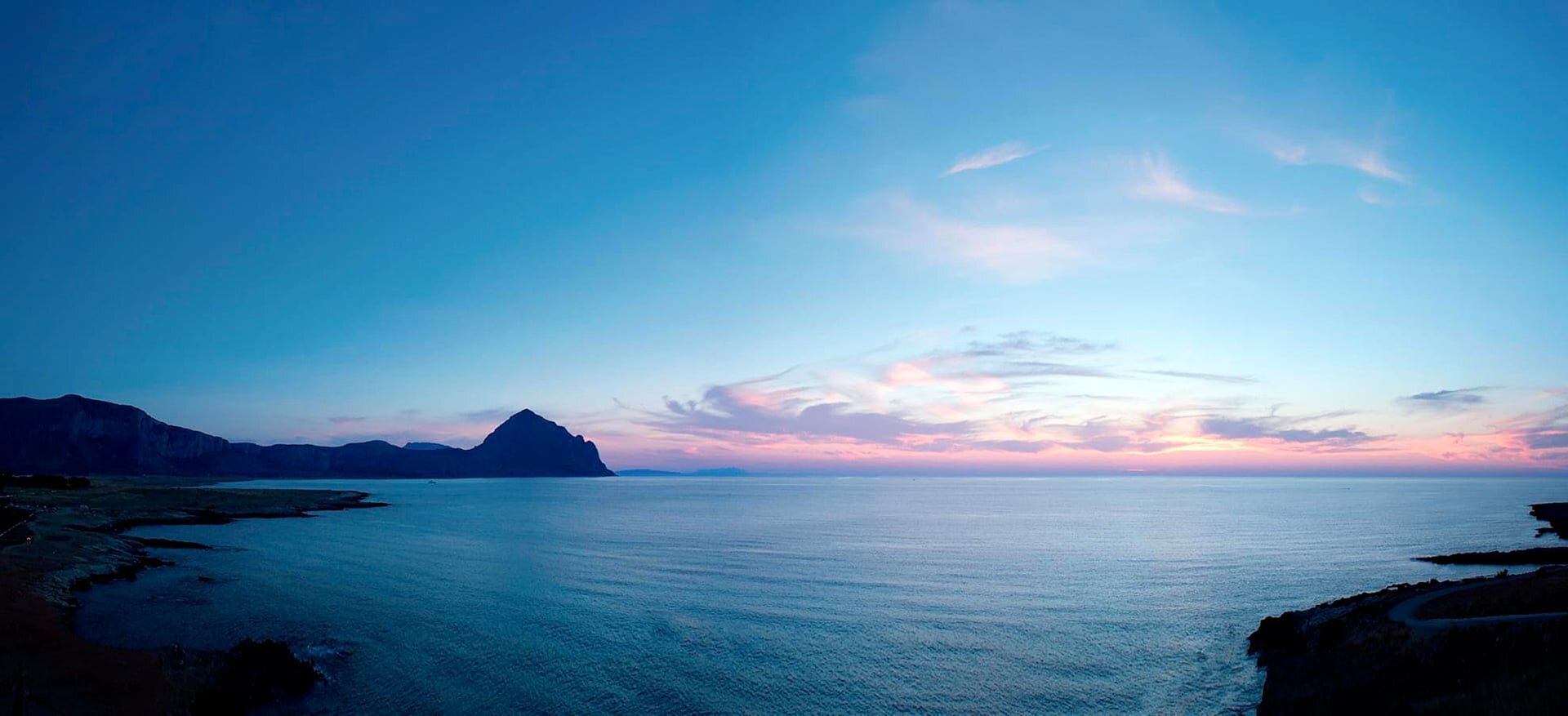
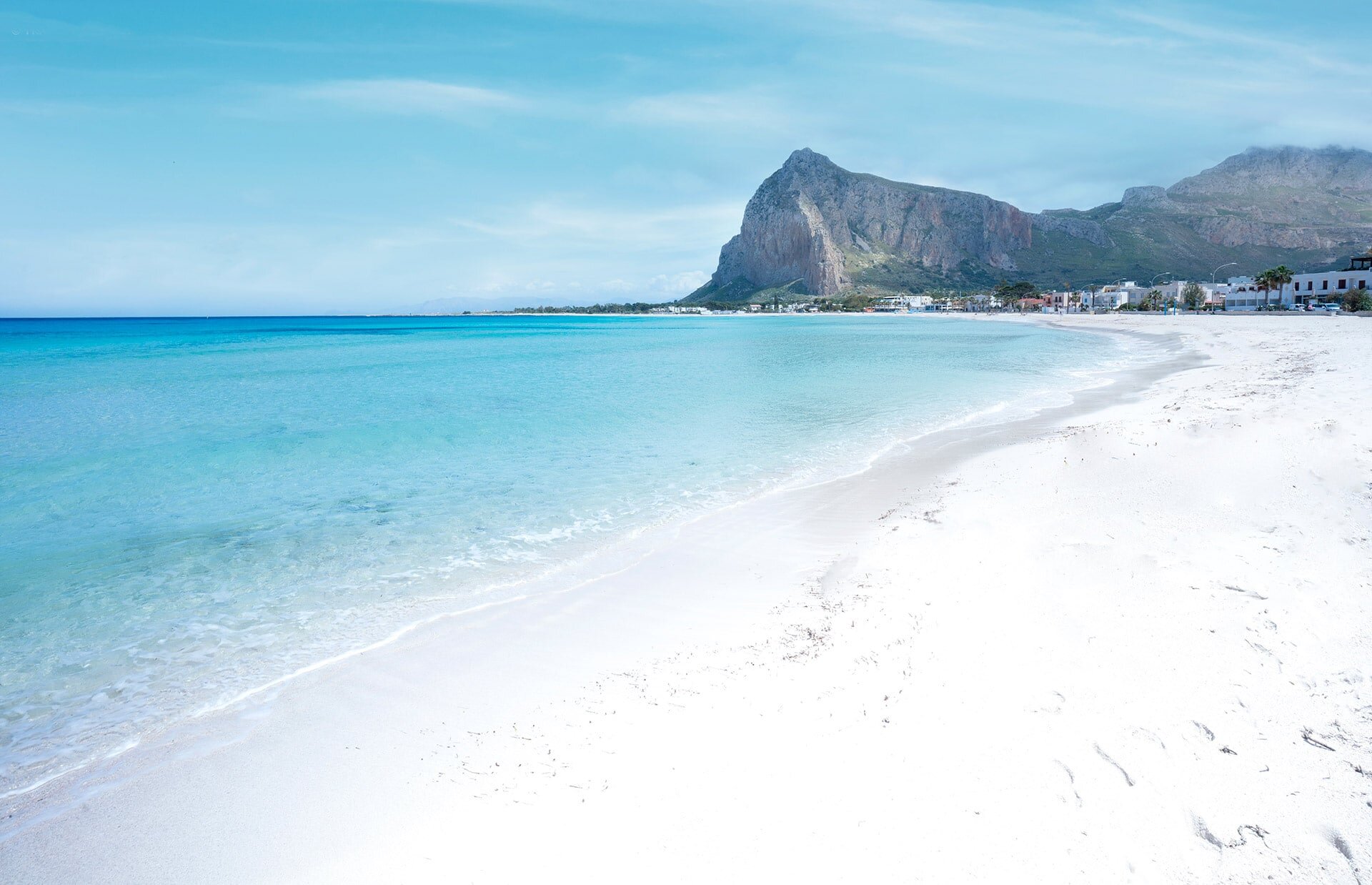
Arriving at San Vito Lo Capo, there is a moment when the horizon opens and you feel you have stepped into somewhere else: behind you the limestone wall of Monte Monaco, in front three kilometres of pure white sand stretching towards a flat, transparent sea. A single step is enough to understand why this corner of Sicily — set between the Gulf of Macari and the Zingaro Reserve — stays with anyone who visits, even just once.
San Vito Lo Capo is not only a beach. It is a whitewashed village of low houses, geraniums and bougainvillea overlooking alleys scented with jasmine, a fortress-sanctuary that protected the community from pirates for centuries, coastal paths leading to coves reachable only on foot, couscous fragrant with fish broth and almonds. A place that asks for time and gives back slowness.
"A promontory of white stone diving into the sea, with almost Caribbean-clear waters: one of the most beautiful corners in Europe."
— Michelin Guide, on the coasts of western Sicily
A story of sea, faith and watchfulness
San Vito Lo Capo was seasonally inhabited since prehistory — the nearby Uzzo Cave, deep in the Zingaro Reserve, still holds traces of habitation from Palaeolithic to Neolithic times. The present-day village, however, is more recent: it took shape during the eighteenth century around an ancient place of worship, in a position long exposed to Barbary and Saracen raids.
The Sanctuary-Fortress of San Vito the Martyr
The true heart of the historic centre is the Sanctuary of San Vito the Martyr. Founded in the fourteenth century as a small chapel dedicated to the young saint, between the fifteenth and sixteenth centuries it was transformed into a compact fortress: thick walls, arrow slits, a defensible courtyard. For centuries it was at once a church and a refuge: when corsair ships appeared on the horizon, the whole community locked itself in. Today the building preserves its original appearance, with a hypogeum, a statue of the Saint, a small museum of sacred furnishings and a wide view over the square.
Coastal towers and lighthouse
Traces still remain along the coast of the sixteenth-century watchtower system that once covered all of western Sicily.


The Zingaro Reserve, Sicily's first protected area
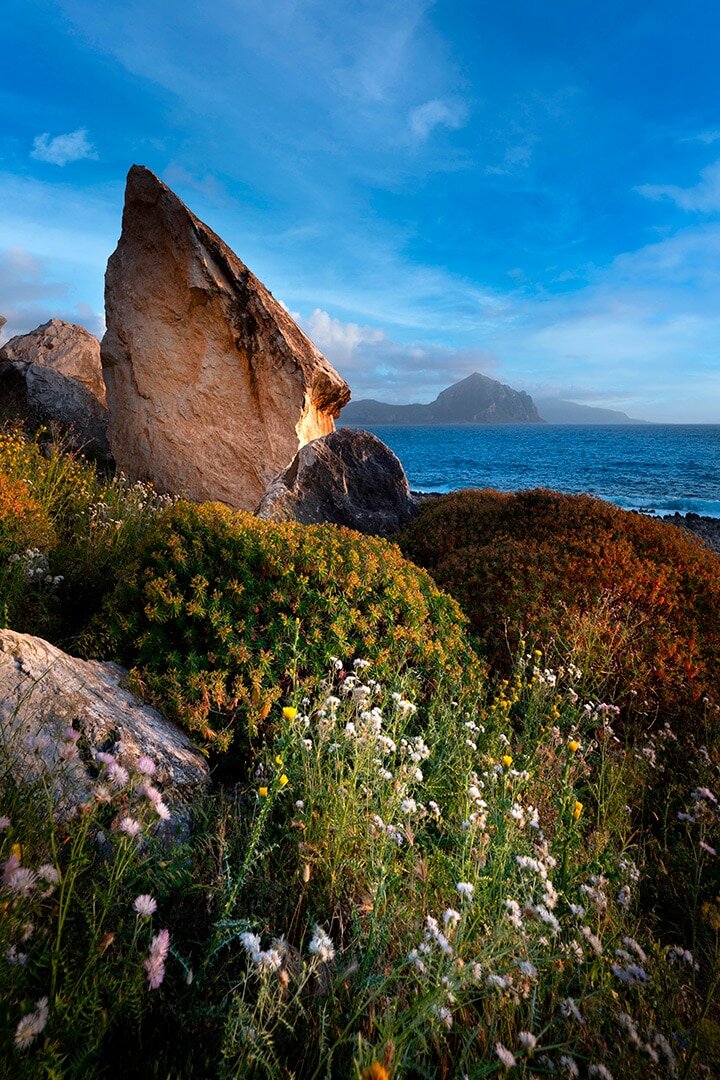
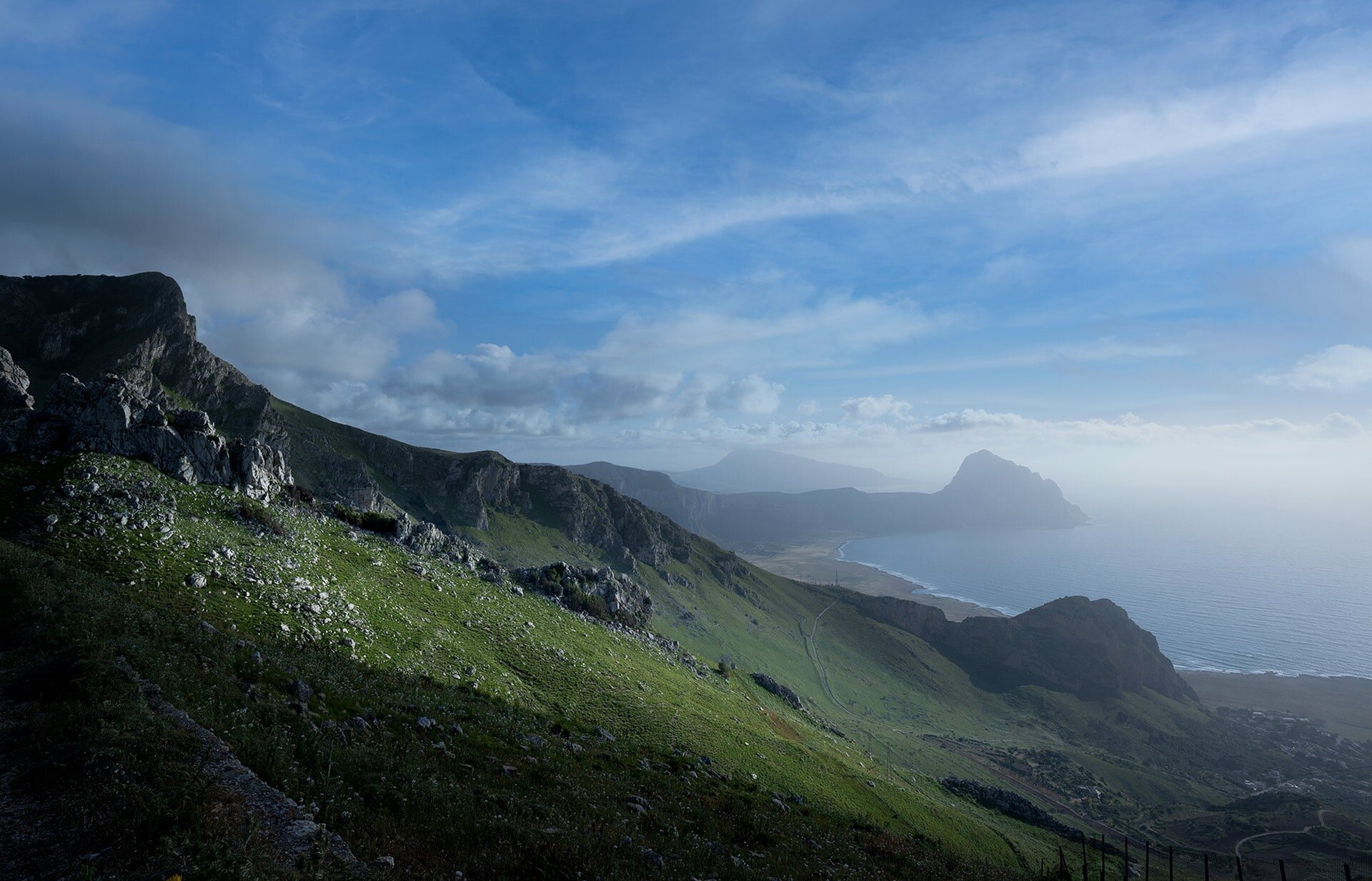
A few kilometres from the village lies the Zingaro Nature Reserve, established in 1981 as the first protected area on the island. Seven kilometres of coastal path connect the northern entrance (San Vito) to the southern one (Scopello): a walk that never grows dull, with Mediterranean scrub fragrant with helichrysum and broom, dwarf palms, wild goats and falcons wheeling over the cliffs.
The real secret is the seven coves reached one after another — Cala Capreria, Cala del Varo, Cala della Disa, Cala Berretta, Cala Marinella, Cala dell'Uzzo, Cala Tonnarella dell'Uzzo — each with its own water, silence and light. Walking the full trail takes a day; many stop after the third or fourth swim. Nearby opens the Uzzo Cave, a prehistoric site where human remains and artefacts have been found, telling ten thousand years of coastal life.
The sea of San Vito: from Caribbean-like beaches to hidden coves
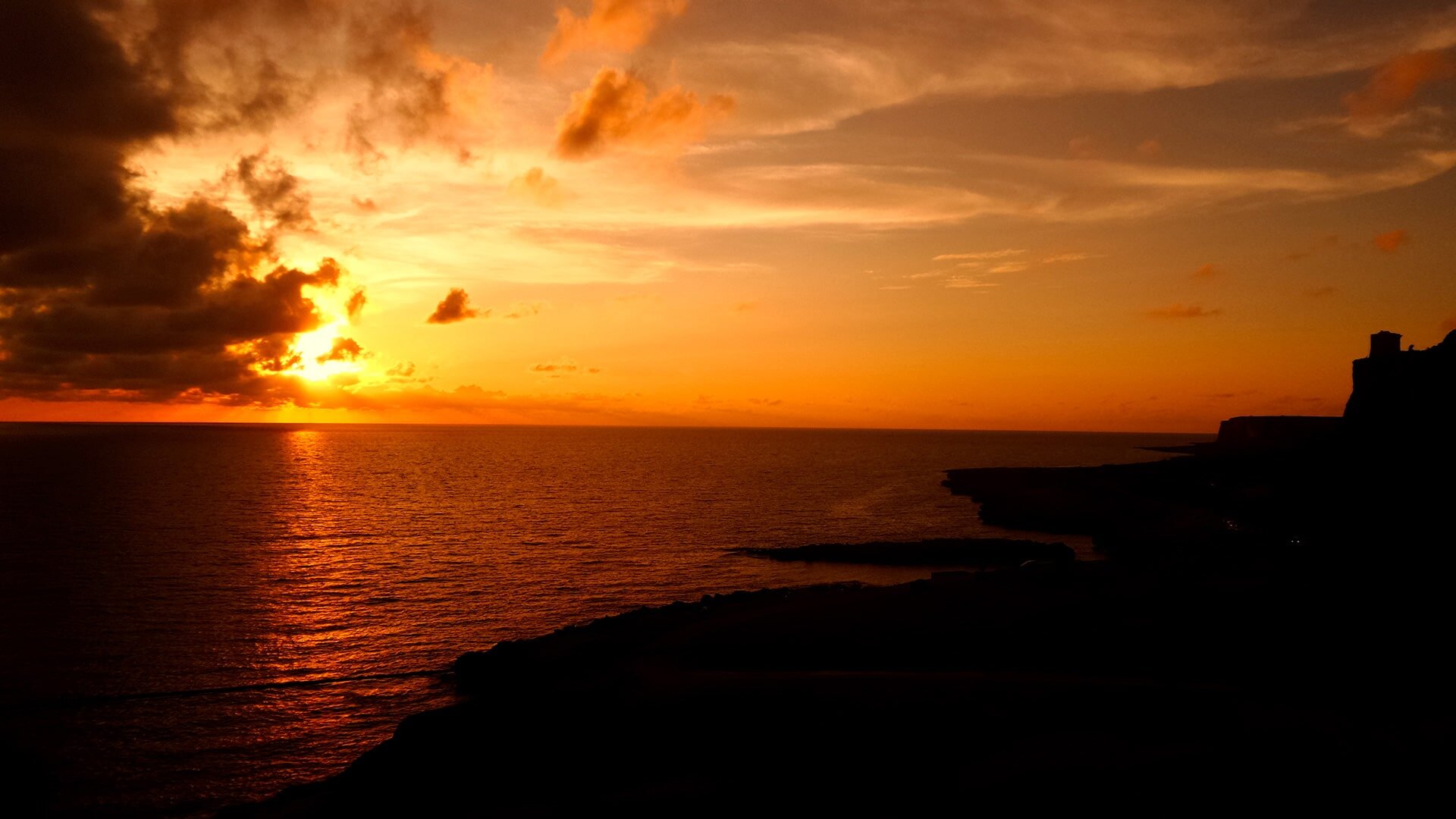
The San Vito beach is the undisputed protagonist: three kilometres of white sand, fine as flour, with a seabed sloping gently into turquoise water that stays transparent for tens of metres. It is the perfect beach for families, but also for anyone in search of one of those sunsets that stay with you.
Those who want more are spoilt for choice: Santa Margherita Bay between Macari and Castelluzzo, with sand and beach services; the intimate coves of Cala Mancina, Bue Marino and Isulidda; the cliffs of Monte Cofano for snorkelling and climbing. In autumn, the San Vito cliffs become an international climbing destination: the limestone rock above the sea is considered among the finest in Europe.
San Vito couscous, a flavour that unites the Mediterranean
In San Vito the symbol dish is couscous with fish, Trapani style: semolina rolled by hand, a rich broth of rock fish, spices, almonds. An Arab-Norman legacy, today the town's banner. Since 1998 the village hosts the Cous Cous Fest every late September: an international gastronomic festival where chefs from ten Mediterranean countries compete with their own take on the dish — a week of cooking, music and encounters. But couscous in San Vito is everyday food: served in the trattorias of the centre, in fishermen's homes, at village festivals. Pair it with a fresh white wine from the Trapani vineyards.
When to visit
San Vito can be visited all year round, but it changes greatly depending on the season: there is a season for the sea, one for trekking, one for climbing, one for flavours.
Frequently asked questions about San Vito Lo Capo
How much time do I need for San Vito Lo Capo?
A few hours are enough for the village itself. But to truly enjoy San Vito — beach, Sanctuary, a couscous dinner and at least one walk in the Zingaro Reserve — you need at least two or three days. Those who love trekking, snorkelling and climbing can easily stay a full week.
How do I get to San Vito Lo Capo?
From Palermo or Trapani take the A29 motorway to the Castellammare del Golfo exit, then the SP63 for about 30 km. From Palermo Punta Raisi airport it takes about 90 minutes; from Trapani Birgi airport about 60 minutes. In high season direct buses run from both airports.
How do I visit the Zingaro Reserve?
The northern entrance is about 12 km from San Vito Lo Capo, at the end of a scenic road. It is open all year (entrance fee) and can only be visited on foot: the coastal trail is 7 km one way. Bring water, a hat and hiking shoes; a snorkelling mask is useful for the coves.
When does the Cous Cous Fest take place?
The Cous Cous Fest is traditionally held between the end of September and the first days of October, for about a week. The main events (concerts, meetings, ceremonies) are free; tastings of the competing nations have a symbolic price. The village is crowded, so book accommodation well in advance.
Are there quieter coves than the main beach?
Yes. For more intimate coves head towards Macari, Cala Mancina, Cala Isulidda, or step into the Zingaro Reserve — its seven coves are often quieter than the main beach, especially in the shoulder seasons.
Where can I try authentic San Vito couscous?
Many trattorias in the historic centre serve couscous with fish, Trapani style, often still prepared by hand. It is worth tasting during a trip to the Cous Cous Fest, but also in the fishermen's homes when the chance arises. It is a generous dish: enjoy it as a main course, not as a starter.
Discover more
For institutional information, events, Sanctuary opening hours and visitor services, please refer to the official website of the Municipality of San Vito Lo Capo.
 Is not it what you were looking for? Review your choice

 Accommodation
 Event
Event
 All services
 How to get there
 Weather forecast