

locality
Egadi Islands

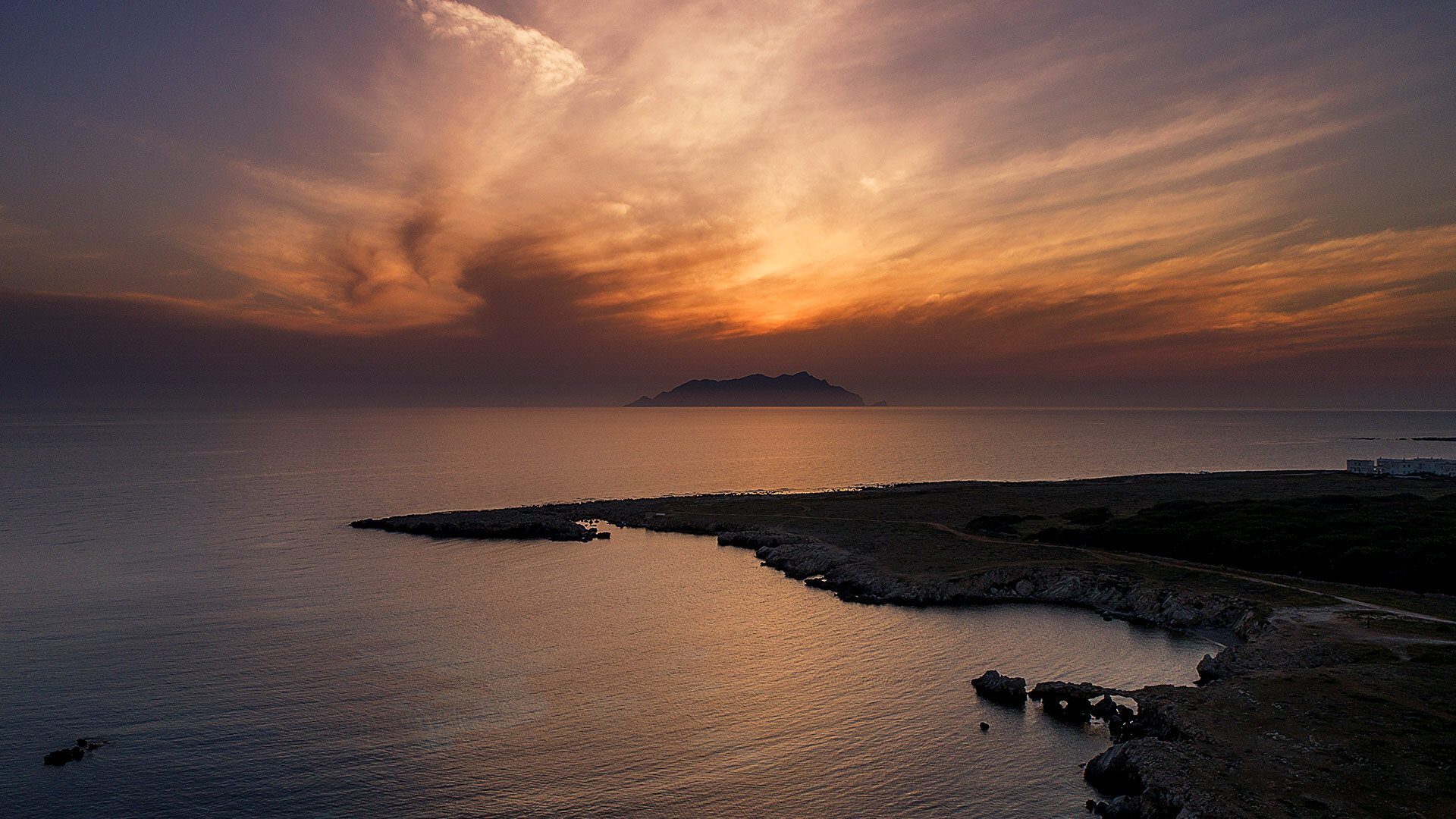
There are three islands floating off Trapani, so close that from the Torre di Ligny you can see them outlined on the horizon, yet each one a world apart in character. They are called Favignana, Levanzo and Marettimo, and together they form the Egadi Islands: an archipelago that was once Carthaginian and Roman, that lived for centuries on tuna and stone, and that today is ringed by the clearest, most protected sea in western Sicily.
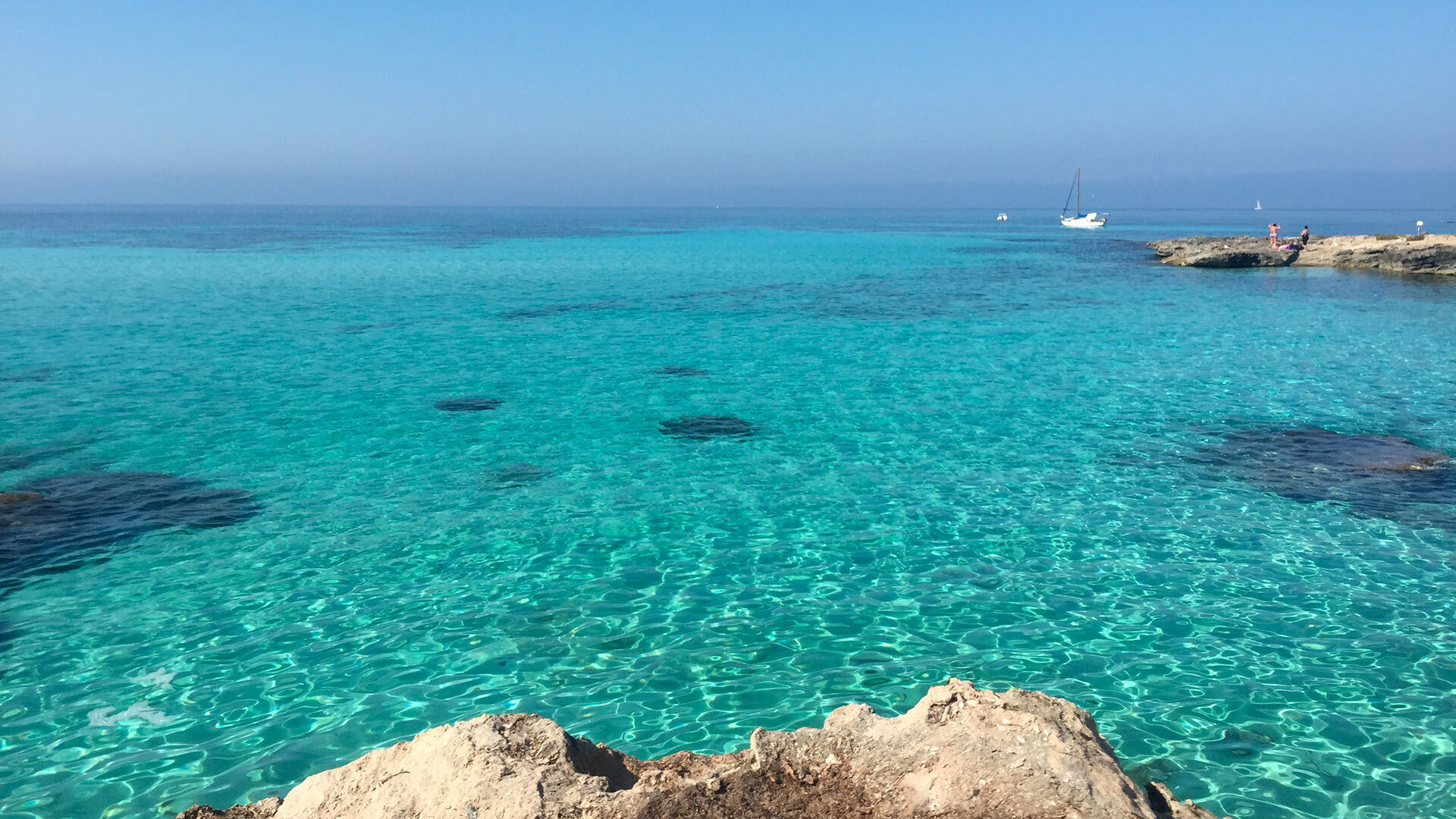
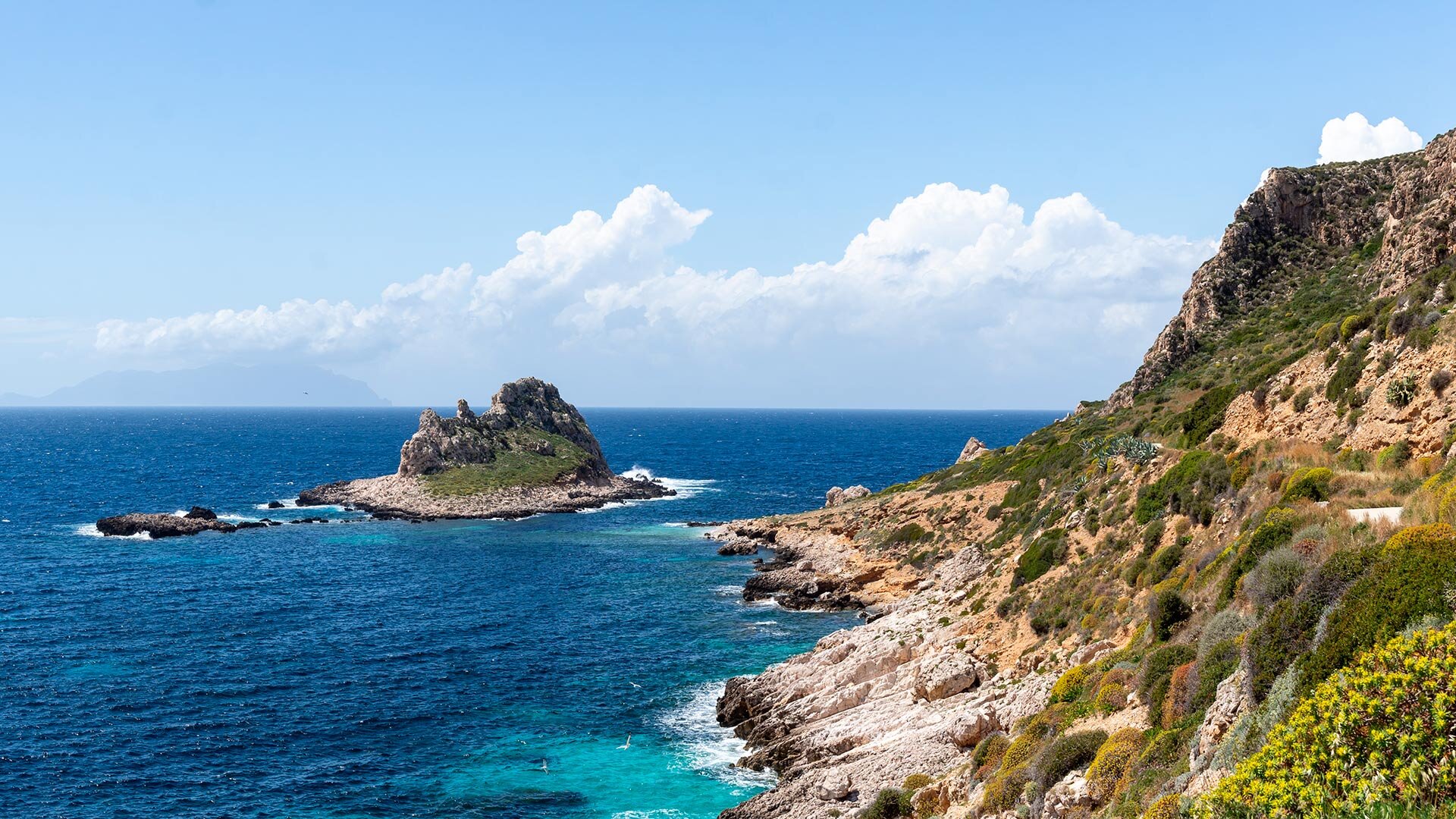
Those who arrive by hydrofoil, half an hour from the coast, find a world unlike the mainland: the butterfly of Favignana with its tufa quarries and coves of impossible blue, tiny Levanzo hiding a cave painted twelve thousand years ago, the green, wild mountain of Marettimo pierced by four hundred caves. And beneath the keels of the boats lies the largest marine protected area in Europe, with its meadows of posidonia and its untouched seabeds.
Fifty-four thousand hectares of protected sea, the largest marine reserve in Europe: in the Egadi the water is not a backdrop, it is the heart of everything.
— Egadi Islands Marine Protected Area
An archipelago off Trapani
The Egadi are three main islands — Favignana, Levanzo and Marettimo — plus the islets of Formica and Maraone, scattered across the stretch of sea between Trapani and Marsala. Inhabited since prehistoric times, they were the setting of the naval battle that in 241 BC ended the First Punic War in Rome's favour. For centuries their economy revolved around two resources: tuna, caught through the ancient ritual of the tonnara, and calcarenite, the "tufa" quarried by hand that built the houses of the islands and of half of western Sicily. Today the Egadi live above all on an extraordinary sea, but that history is still carved into their rocks and stones.
Favignana, the butterfly on the sea
The largest and most famous of the Egadi is Favignana, nicknamed the "butterfly" for the shape of two wings that Mount Santa Caterina divides when seen from above. It is the island of the tufa quarries: for centuries quarrymen extracted the calcarenite by hand, leaving in the interior vast open-air amphitheatres with vertical walls, now transformed into sunken gardens. On the northern side lies Cala Rossa, where the stone pillars left by the quarrymen frame one of the most beautiful seas in Italy. And then there is the Florio Tuna Factory, the imposing nineteenth-century plant built by Ignazio Florio, for a long time the most important in the Mediterranean for processing tuna, now restored as a museum and symbol of the island.
Levanzo, the smallest and the painted cave
The smallest of the three is Levanzo: a handful of white houses facing a little harbour, no car horns, only the sound of the sea. Yet behind that simplicity the island guards a treasure rare in the whole Mediterranean: the Grotta del Genovese, discovered by chance in 1949 and decorated with prehistoric engravings and cave paintings. The carvings date to the final phase of the Palaeolithic, the black and red paintings to the Neolithic: deer, cattle, horses, fish, human figures and even the tuna, witnesses to ten thousand years of history. It is one of the most important complexes of rock art in Italy and can be visited only with an authorised guide.
Marettimo, the wildest
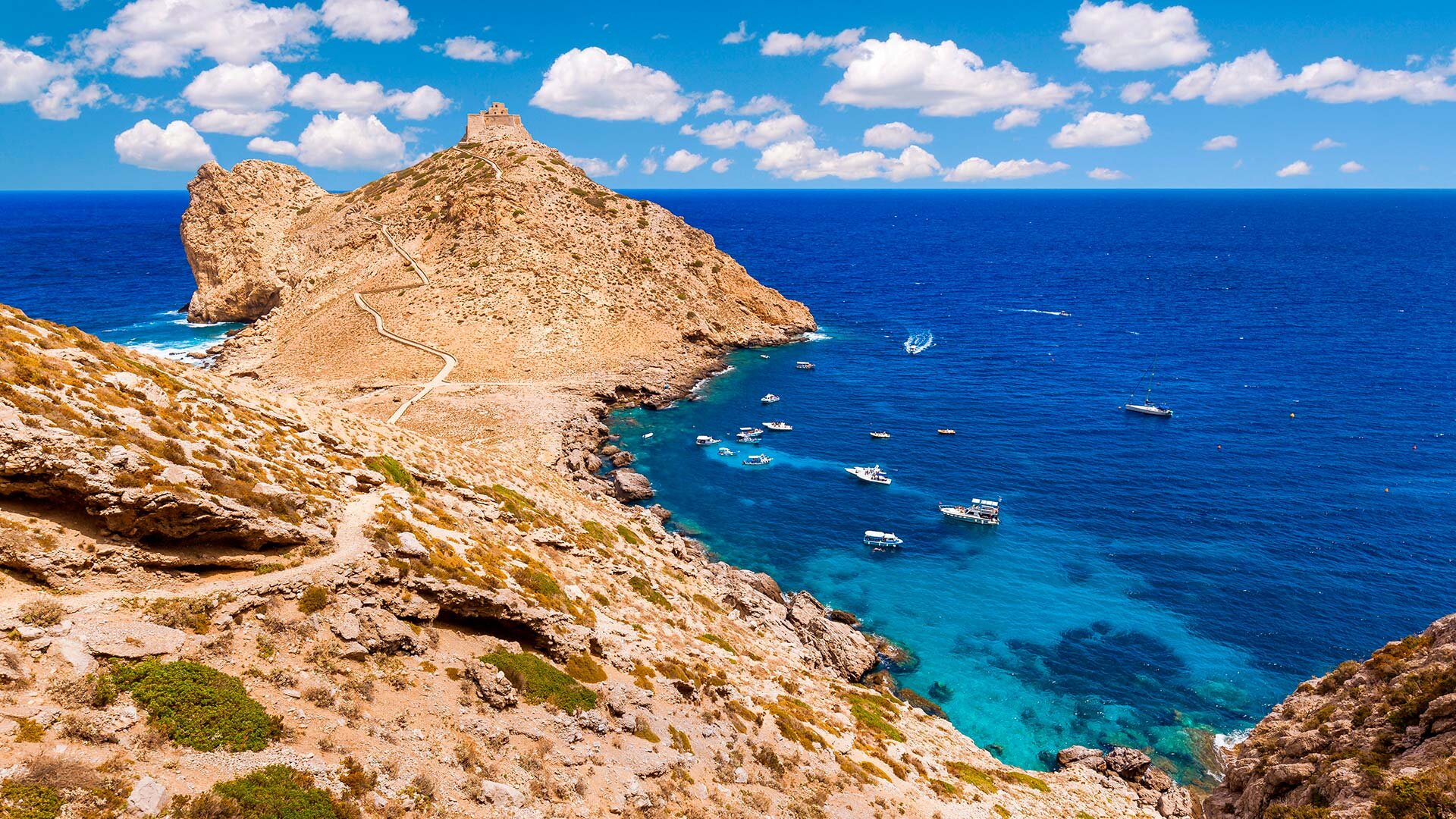
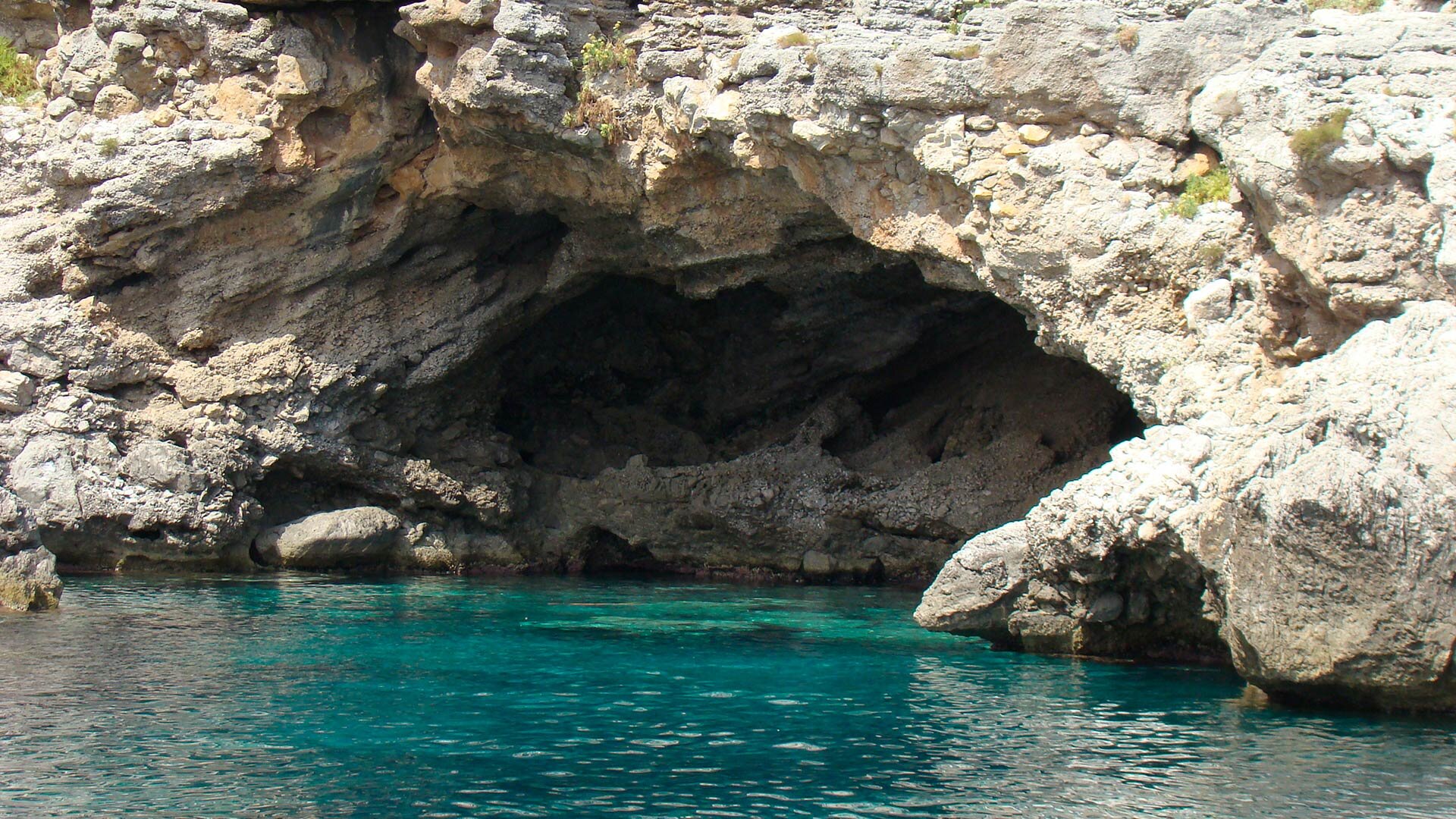
The westernmost and most distant is Marettimo, the wildest and most mountainous of the Egadi: intensely green, covered in Mediterranean scrub, with a small fishing village and no cars at all. Its coastline is pierced by more than four hundred sea caves — the Grotta del Cammello, the Grotta del Tuono, the Grotta della Pipa — which can be explored only by boat. Inland, a network of footpaths climbs quickly through the scents of the scrub to panoramic viewpoints and archaeological remains, such as the Castle of Punta Troia, perched on a headland sheer above the blue. Secluded coves like Cala Bianca reward the effort of reaching them with their unspoilt beauty.
Tuna, the tonnara and the protected sea
For centuries life in the Egadi was marked by the tonnara and the mattanza, the ancient and spectacular technique for catching bluefin tuna that each spring gathered men and boats. Today that memory is preserved in the museums, while the sea around the islands has become the Egadi Islands Marine Protected Area, established in 1991 and, with its roughly 54,000 hectares, the largest in Europe. Here grow some of the most extensive meadows of posidonia in the Mediterranean, a nursery of marine life, and the seabeds offer some of the finest diving and snorkelling in the area. Not to be missed:


Getting to the Egadi
The Egadi Islands are reached by hydrofoil or ferry from the ports of Trapani and Marsala, with daily departures all year round and frequent crossings in high season. From Trapani the hydrofoil reaches Favignana in about half an hour (the ferry in around an hour); Levanzo is a few minutes from Favignana, while Marettimo, the most distant, requires a longer crossing. On the islands you move on foot, by bicycle or with small electric vehicles — on Marettimo cars do not circulate at all. In summer it is best to book your crossing in advance and always check the operators' up-to-date timetables.
When to go
Frequently asked questions about the Egadi Islands
How many Egadi Islands are there and which ones should I visit?
There are three main islands: Favignana, the largest, with its tufa quarries and Cala Rossa; Levanzo, the smallest, with the Grotta del Genovese; and Marettimo, the wildest and most mountainous. The islets of Formica and Maraone complete the group. Each has a different character: in one holiday it is well worth visiting all three.
How do you get to the Egadi Islands?
By hydrofoil or ferry from the ports of Trapani and Marsala, with daily departures. From Trapani the hydrofoil reaches Favignana in about half an hour, the ferry in around an hour. Levanzo is very close to Favignana, while Marettimo requires a longer crossing. In summer it is best to book and check the up-to-date timetables.
How many days do you need to see the Egadi?
Favignana can be comfortably toured in a day, by bicycle. To also visit Levanzo and its cave, and to give time to the footpaths and sea caves of Marettimo, you need at least two or three days. Many choose Favignana as a base and reach the other islands on day trips.
How do you visit the Grotta del Genovese on Levanzo?
The Grotta del Genovese, with its prehistoric engravings and cave paintings, can be visited only with an authorised guide. It is reached from Levanzo overland (by off-road vehicle) or by sea, on organised excursions. It is best to book in advance and check opening days and times.
What is the Egadi Marine Protected Area?
It is the largest marine reserve in Europe: established in 1991, it protects around 54,000 hectares of sea around the islands, including vast meadows of posidonia. It regulates fishing and diving and protects some of the finest seabeds in the Mediterranean, ideal for snorkelling and diving.
Why is Favignana called the "butterfly"?
For its shape: seen from above, the island resembles a butterfly with outspread wings, divided by the rise of Mount Santa Caterina. It is the island of the tufa quarries and of the spectacular sea of Cala Rossa, as well as home to the historic Florio Tuna Factory.
Discover more
For official information, visitor services and news about the islands, see the official website of the Municipality of Favignana – Egadi Islands.
 Is not it what you were looking for? Review your choice


 Accommodation
 Event
Event
 All services
 How to get there
 Weather forecast