Erice

Erice Erice

There are days when Erice floats above the clouds. Mount Erice — that triangle of white limestone rising 751 metres above Trapani and the salt pans — climbs so sharply from the sea that its summit is often wrapped in fog. Anyone arriving by cable car from Casa Santa watches the town appear and disappear through drifting mist, as if the village did not quite belong to the world below.

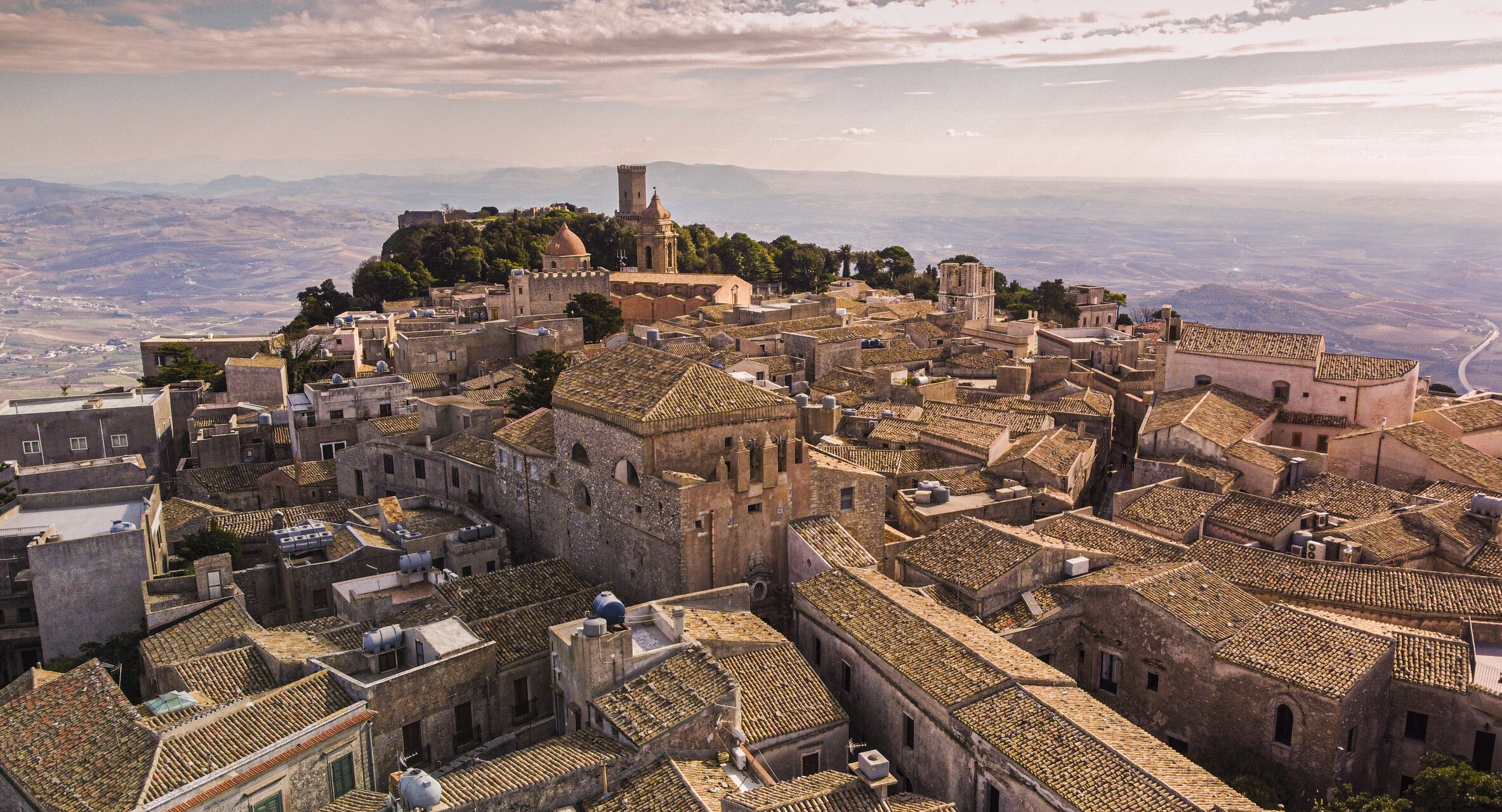
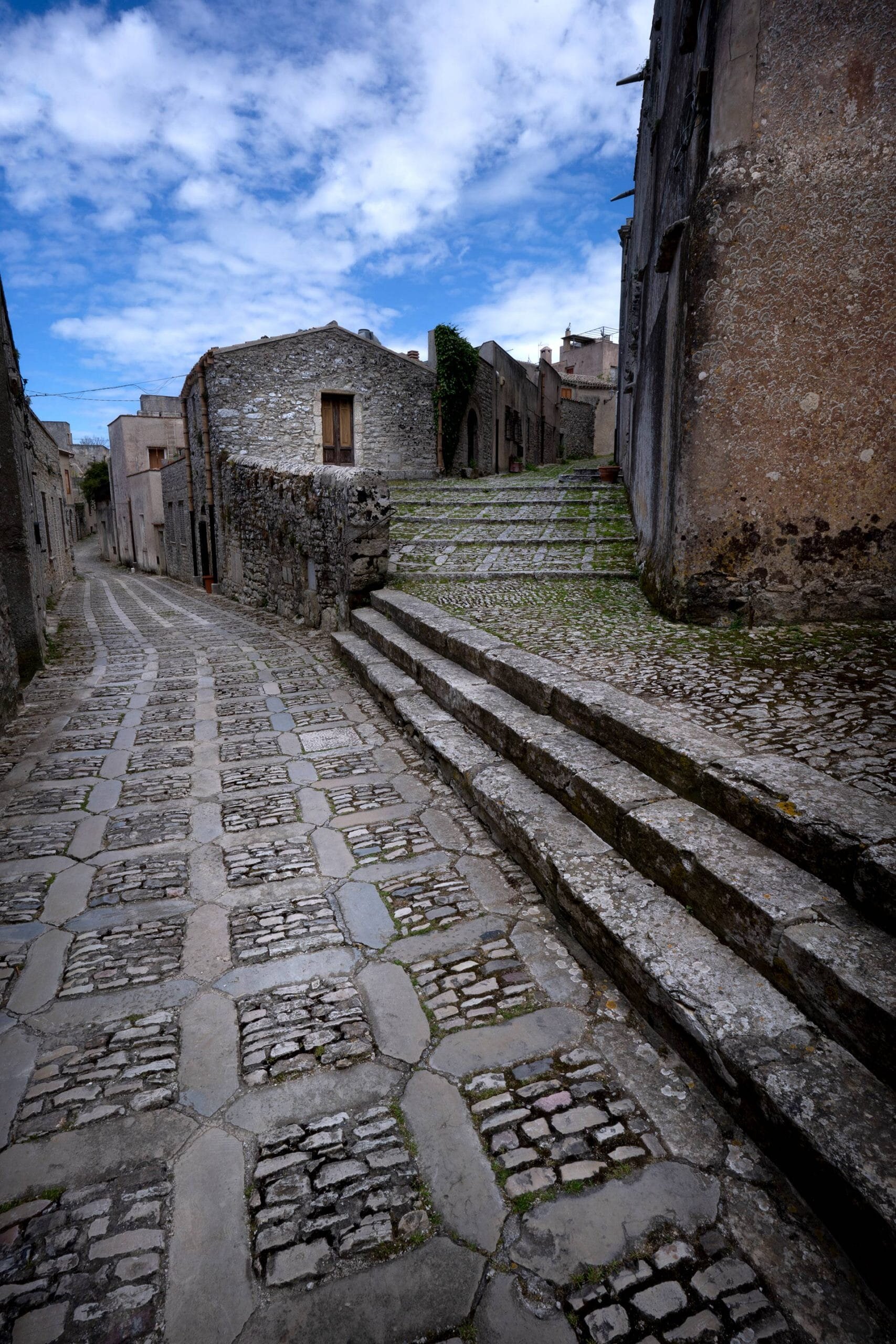
The town is medieval in appearance, Elymian-Phoenician in its oldest walls, Roman in the cult of its goddess, Norman in the castle that dominates its hill. The streets — here called vanedde, small cobbled lanes — trace a perfect triangle, the same shape as the mountain. You walk slowly, pass under stone arches, catch the scent of almonds from the pastry-shop ovens: Erice is a town to savour.

"The air is always pure and light; the view, of rare beauty, extends over Trapani and the Egadi Islands."
— Vincenzo Adragna, historian of Erice

The temple of Venus and the castle that took its place

Before becoming a medieval town, Erice was a sanctuary. On the highest point of the mountain the Elymians raised a temple to a female deity whom the Phoenicians identified with Astarte, the Greeks with Aphrodite, the Romans with Venus Erycina. The cult was so revered that pilgrims arrived from across the Mediterranean; the sacred priestess-prostitutes of "temple prostitution" were both subject of ancient tales and scandal to Roman censors. The temple gradually disappeared in the imperial age, and above its ruins — reusing stones and blocks — the Normans built the Castle of Venus in the twelfth-thirteenth century, still today the silhouette on the summit.

The cyclopean walls and the castles

Erice preserves overlapping historical layers still visible today as you walk.

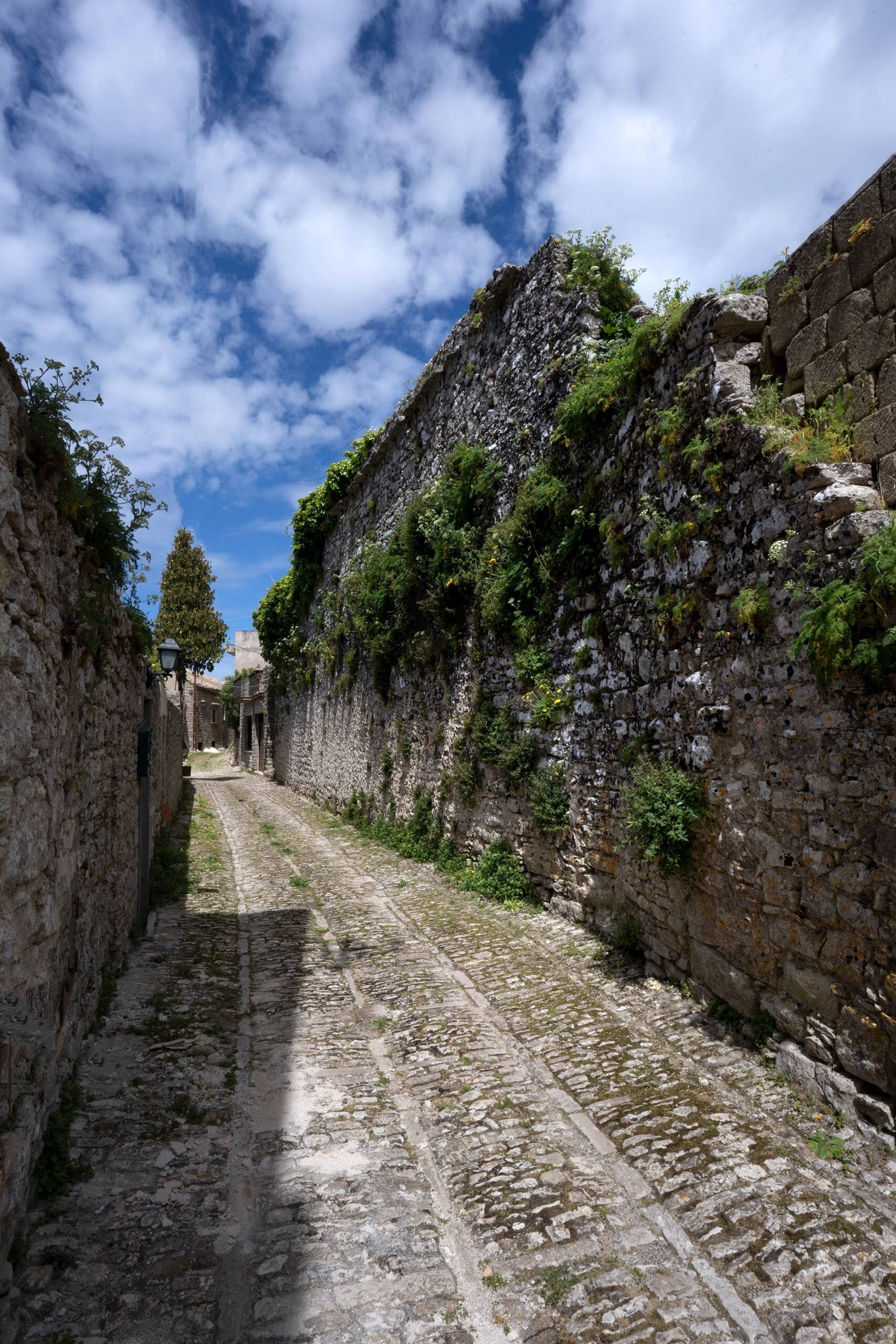
Cyclopean Walls — Elymian-Phoenician-Punic (8th-7th century BCE), great squared blocks still surrounding part of the old town.
Castle of Venus — Norman, 12th-13th century, built on the ruins of the temple of Venus Erycina. Open to visitors.
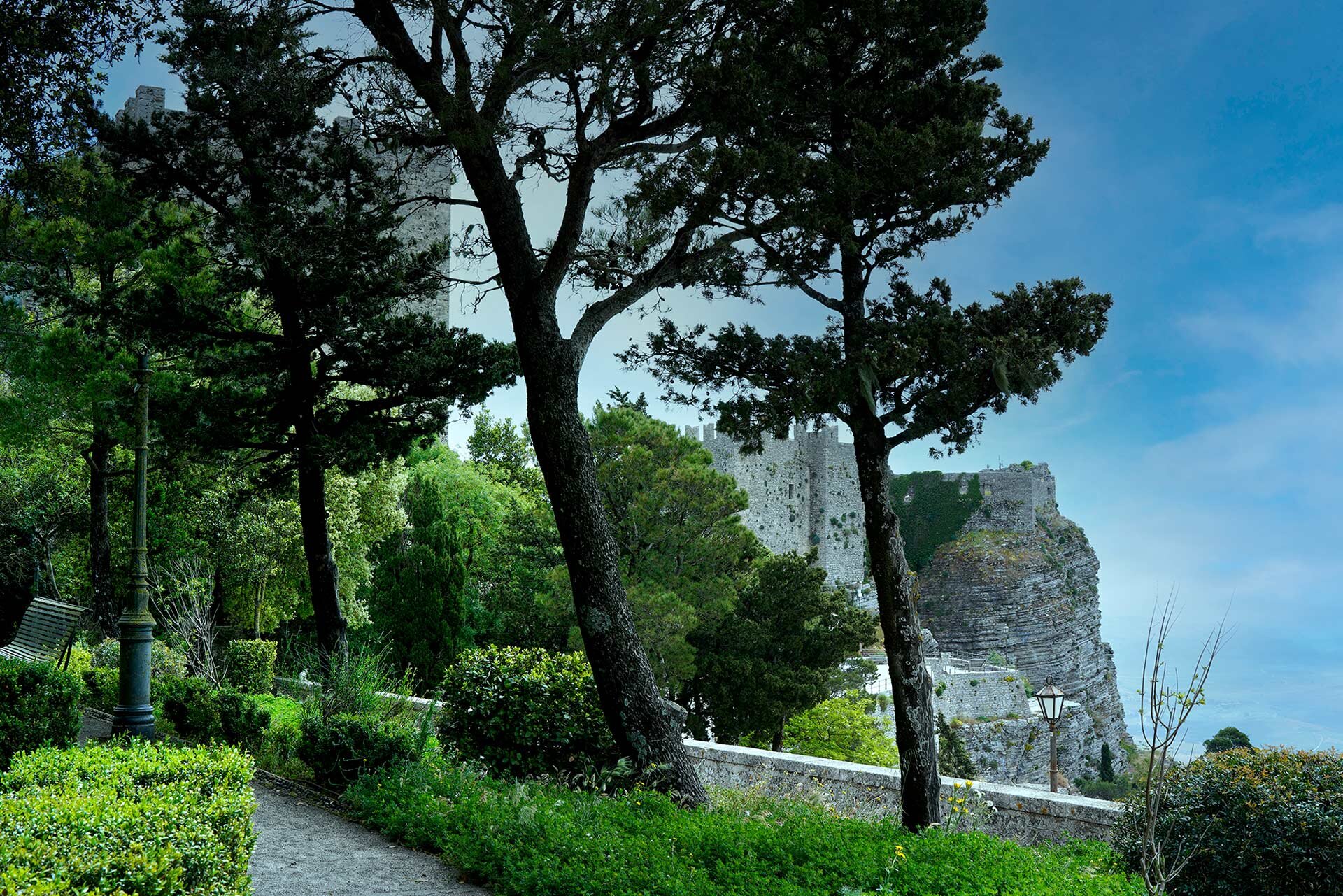
Castello Pepoli and Balio Gardens — medieval fortification with three towers, today surrounded by a romantic nineteenth-century garden (open access).
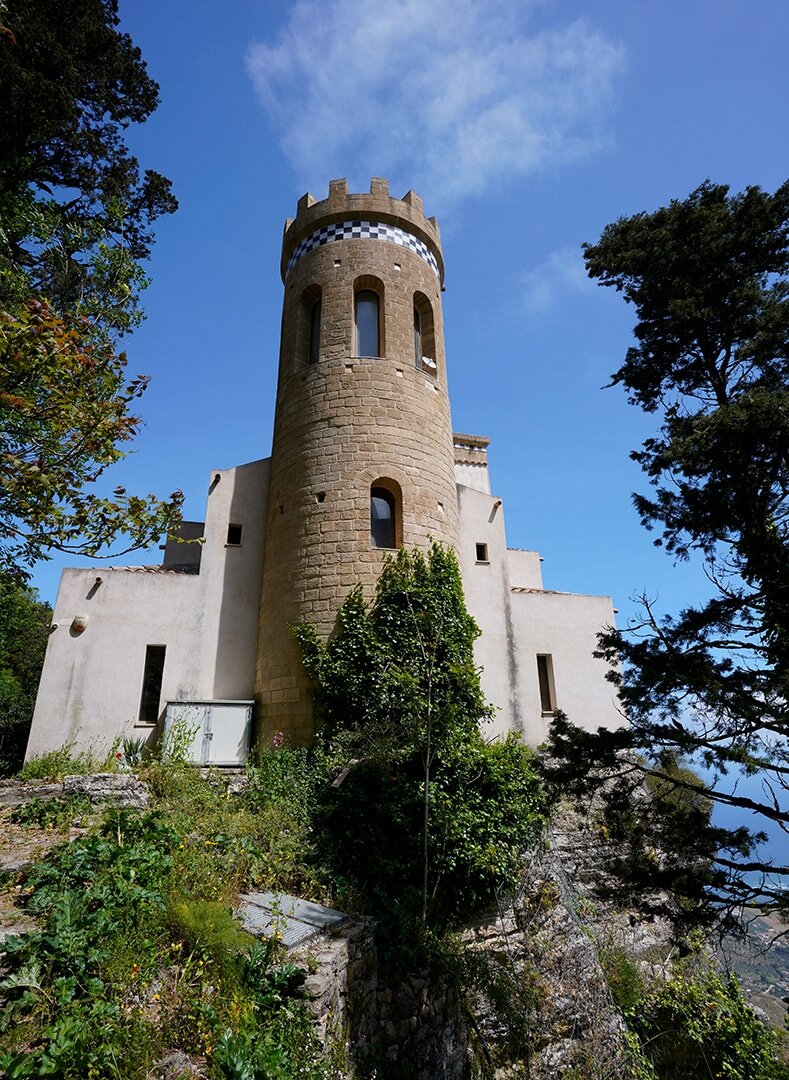
Torretta Pepoli — built in the nineteenth century by Count Agostino Pepoli, today a panoramic point and small museum.

Giardini del Balio in Sicilia | © Archivio West of Sicily Giardini del Balio in Sicilia | © Archivio West of Sicily
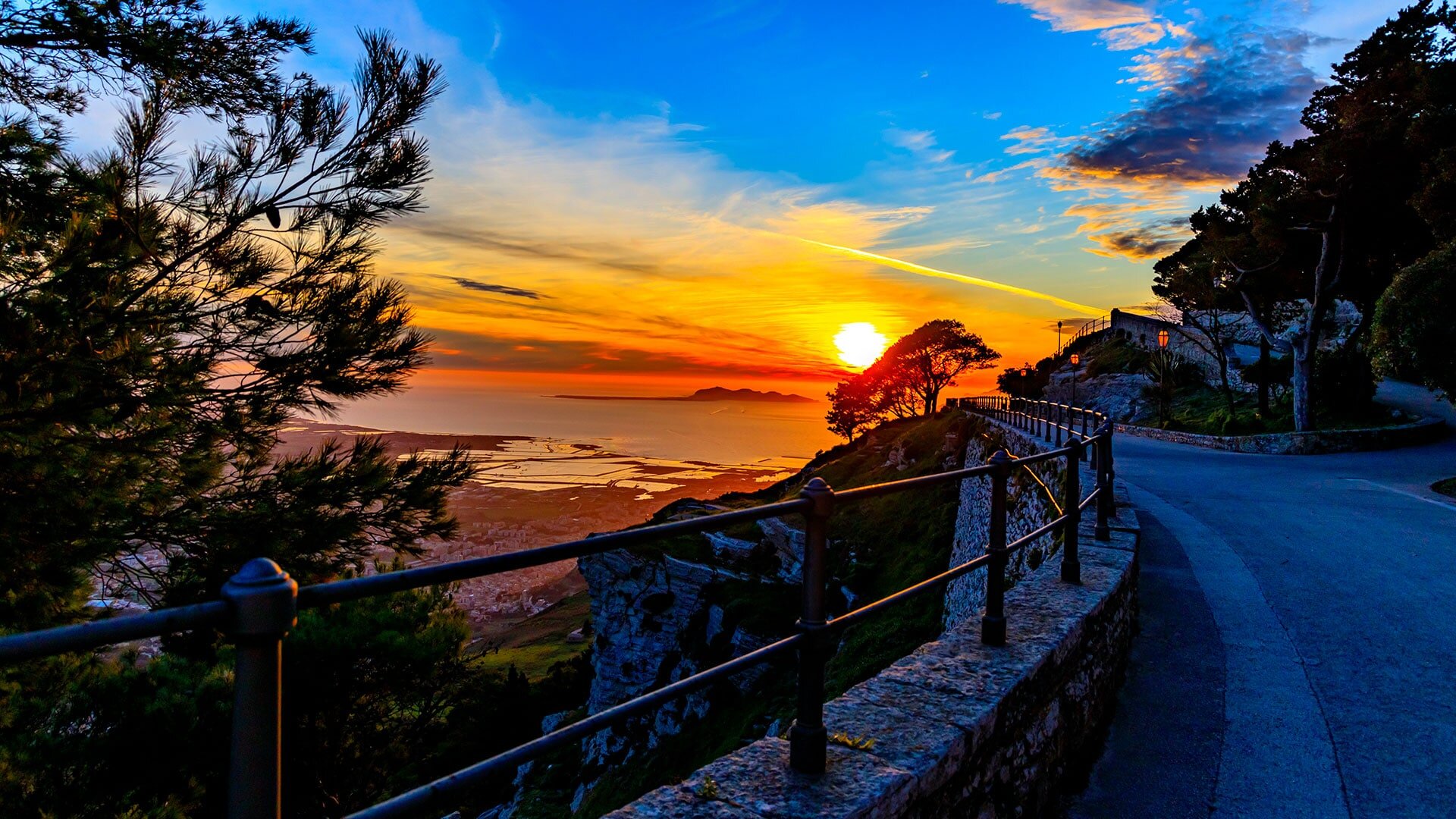
Tramonto a Erice | © Archivio West of Sicily Tramonto a Erice | © Archivio West of Sicily
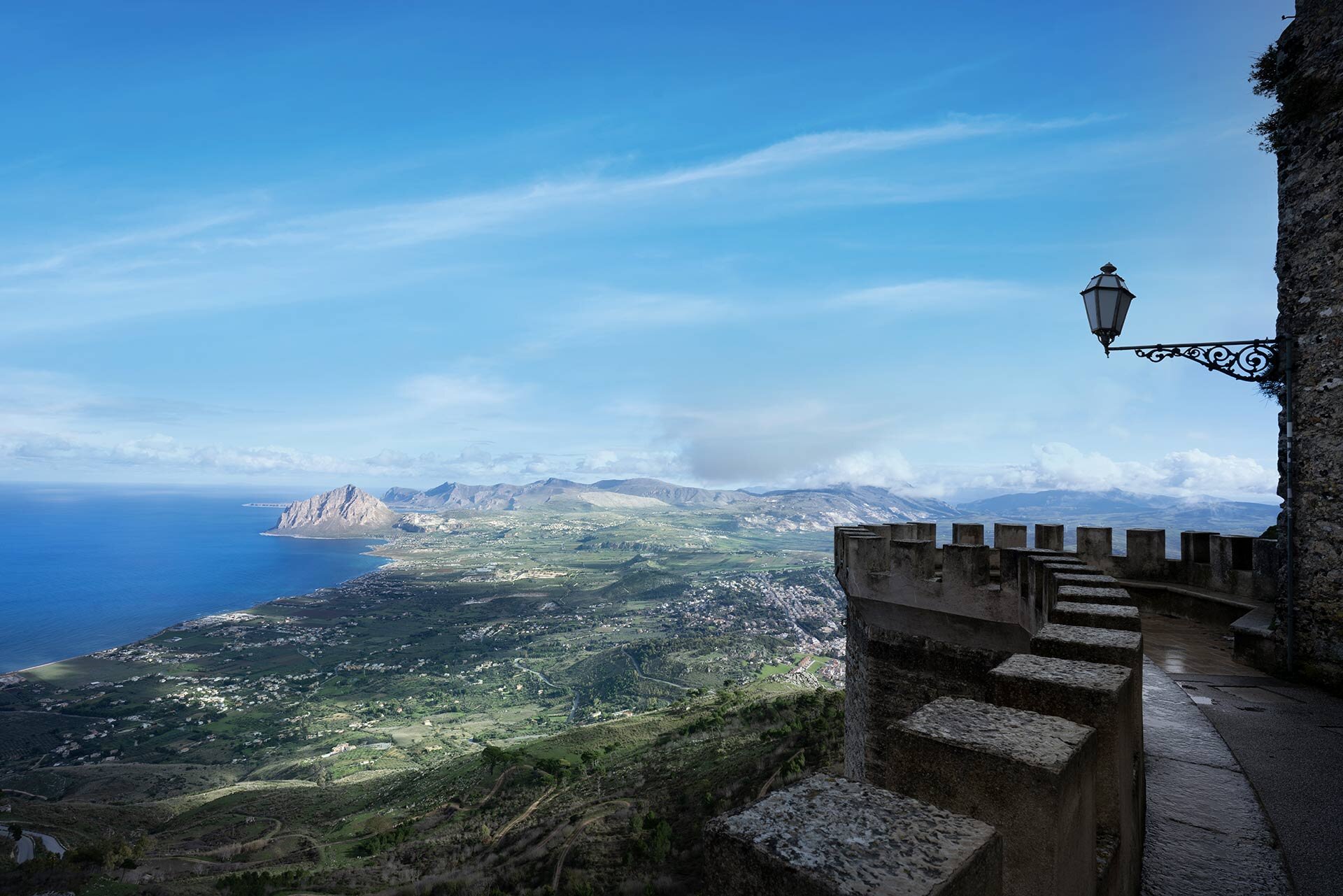
Panorama a Erice | © Archivio West of Sicily Panorama a Erice | © Archivio West of Sicily
Torretta Pepoli | © Archivio West of Sicily Torretta Pepoli | © Archivio West of Sicily
Borgo di Erice | © Archivio West of Sicily Borgo di Erice | © Archivio West of Sicily

The town of 40 churches and the Mother Church

At one point in its history Erice counted almost forty churches, an extraordinary number for a town of a few thousand souls. The most important is the Chiesa Madre (Real Duomo), built in the fourteenth century with stones from the ancient temple and recognisable by its great Gothic rose window on the façade and its isolated bell tower — a true watchtower converted into a belfry. Inside, a fifteenth-century baptismal font and a statue of the Madonna attributed to the workshop of Francesco Laurana.

Not far away, the Chiesa di San Giovanni Battista preserves sculptures from the workshop of Antonello Gagini, one of the greatest masters of the Sicilian Renaissance. The old town is dotted with other churches — San Giuliano, San Martino, San Cataldo, San Pietro — telling how many religious orders have left their mark on this mountain.


The city of science

In 1963 the physicist Antonino Zichichi founded in Erice the "Ettore Majorana" Centre for Scientific Culture, which over the years has hosted Nobel laureates, researchers and summer schools in physics, biology and medicine. Sciascia was a recurring guest, Dirac and Feynman came: the medieval village of 20,000 inhabitants has found itself, for a few weeks each year, the headquarters of world physics. The Centre's premises occupy former monasteries and old palaces, restored for use — a striking dialogue between medieval stone and contemporary research.


Convent sweets

Erice's confectionery tradition was born in the convents. For centuries the cloistered nuns prepared, behind the grilles, the dolci di badia ("convent sweets"): almond pastes, marzipan shaped like fruit, honey biscuits. Even today the Maria Grammatico pastry shop — her founder grew up in a convent orphanage where she learned the recipes — is a mandatory pilgrimage. The genovesi (small pastry rounds filled with warm custard cream), the almond bocconcini, the spiced mustaccioli, marzipan in the shape of peaches and prickly pears. Worth a stop at the café.


Views

From the top of Erice you see a portion of western Sicily that alone is worth the journey. West: Trapani curving into the sea, with the salt-pan windmills and the Egadi Islands (Favignana, Levanzo, Marettimo) on the horizon. South: Mozia, Marsala, and on clear days as far as Ustica. East: Monte Cofano and the profile of the Gulf of Castellammare. North: open sea. The terrace of the Balio Gardens, at the entrance to the Castle, is perhaps the best place to take it all in.


When to visit

Spring — ideal climate, clear sky, distant views well visible. Perfect for walks in the centre and in the Balio Gardens.
Summer — at 751 metres it is cooler than Trapani, often 8-10°C less. A pleasant refuge in the hot hours. Lively evenings with music in the centre.
Autumn — mist begins to cover the mountain, giving that "suspended" air that makes Erice unique. Perfect for photography and atmosphere.
Winter — cold, often dense fog, sometimes snow. But also the Procession of the Mysteries on Good Friday at Easter, and lit fireplaces in the cafés.

Frequently asked questions about Erice

How much time do I need for Erice?

Four to five hours are enough for the town, the Castle of Venus and the Balio Gardens. Adding the Mother Church, the Cordici Museum, a long stop in a pastry shop and the old-town alleys, a full day. Ideal as a stop during a stay in Trapani or San Vito Lo Capo.

How do I get to Erice?

The two most beautiful routes: the cable car from Trapani (Casa Santa) — 10 minutes with a view over the gulf, running almost all year with occasional winter maintenance stops — or the scenic hairpin road from the north side (care needed in fog). Parking at Porta Trapani.

What is there to see inside the Castle of Venus?

The Norman castle preserves its military structure and panoramic views over all four sides. Inside are visible the remains of the ancient temple of Venus Erycina, with sacred wells and finds. For some years Venere Immersive has been active, a multimedia journey through the cult of the goddess.

Where to eat the best genovesi?

The Maria Grammatico pastry shop on Via Vittorio Emanuele is the most famous, with warm genovesi served on the spot. Other central cafés also make excellent versions. The genovese is a small round pastry filled with vanilla custard cream, to be eaten warm.

Can I visit Erice even in fog?

Yes, and perhaps it is even more enchanting — the mist transforms the town into a place out of time. The cobbled alleys, lit by lanterns, become magical. The only limitation is the panoramic view from the castle and Balio Gardens, which disappears in dense fog. Bring a light jacket even in summer.

What is the Ettore Majorana Centre?

The "Ettore Majorana" Centre for Scientific Culture, founded in 1963 by the physicist Antonino Zichichi, is an international institution for research and summer schools in physics, biology and medicine. It hosts over 130 courses every year with participants from all over the world. Its premises occupy restored former monasteries.


Discover more

For institutional information, opening hours of the Castle of Venus and museums, events and visitor services, please refer to the official website of the Municipality of Erice.

Related content

Between Mount Bonifato and the sea, a mosaic of golden stone, vineyards and far horizons

Alcamo

A town that tells its story from the heights of its mountain and mirrors itself in the Gulf of Castellammare. Medieval castles, baroque churches and the bright fragrance of its most celebrated wine await those who choose to explore it slowly.

Buseto Palizzolo

A walk inside the scents and colors of a city garden.

Calatafimi Segesta

A Journey Through Time in the Heart of Sicily

Campobello Di Mazara

The dense foliage of centuries-old olive trees characterises the landscape of this town

The Arab-Norman port town overlooking the gulf, between the fortress by the sea, the sea stacks of Scopello and the Zingaro Reserve

Castellamare Del Golfo

A castle that has guarded the port since the Middle Ages, an old town climbing up from the sea in steps, the sea stacks of Scopello and the gateway to the Zingaro Reserve. Castellammare del Golfo is the fishing town where western Sicily, Mediterranean history and nature meet in a single view.

Castelluzzo

Small jewel that constitutes the wildest side of San Vito Lo Capo.

Castelvetrano

Pure uncontaminated nature

The marble town at the foot of Monte Cofano, between the sanctuary of the Madonna who arrived by sea and the living nativity of the Mangiapane Cave

Custonaci

A Marian sanctuary that guards a painting attributed to the school of Antonello da Messina, a troglodyte village where every Christmas the most evocative living nativity in Sicily comes to life, the Monte Cofano Nature Reserve and a hundred marble quarries. Custonaci is intimate, devoted western Sicily.

Favignana

The largest of the Egadi islands

The town destroyed by the earthquake and reborn as an open-air contemporary art museum, between Burri's Cretto and the works of the great masters of the twentieth century

Gibellina

A town razed to the ground by the Belice earthquake and rebuilt as a single, immense work of art: the Stella di Consagra that serves as its gateway, the great white sphere of the Chiesa Madre, and a few kilometres away the Cretto di Burri, the concrete shroud enveloping the ruins of the old town. Gibellina, Italian Capital of Contemporary Art 2026.

Egadi

Favignana, Marettimo, Levanzo: the islands of treasures

Levanzo

Small and wild

Macari

Macari, along with Castelluzzo, is a fraction of San Vito Lo Capo.

Marettimo

Uncontaminated nature

Marsala

Wine, baroque art and windmills

The town where Sicily turns into Africa, among the Arab alleys of the Kasbah, the Dancing Satyr brought back from the sea and the largest fishing fleet in Italy

Mazara del Vallo

A maze of Islamic-flavoured alleys where Arabic still echoes, a Greek bronze fished up from the deep that dances alone in a museum, a Baroque cathedral grown over a mosque, and four hundred trawlers bringing home the famous red prawn every day. Mazara del Vallo is the point where Europe touches Africa.

Sicily's youngest municipality, a mosaic of hamlets among the salt pans, the golden beaches of Marausa and the sea-scented countryside south of Trapani

Misiliscemi

Born in 2021 from the union of eight ancient hamlets, Misiliscemi is not a town but a territory: the long beach of Marausa facing the Stagnone lagoon, the salt pans of Salinagrande, the farming districts with Arabic names and the airport that is the gateway to western Sicily. Authentic Sicily, the kind you live rather than visit.

Paceco

Windmills, salt flats, pink flamingos. It sounds like a movie, but it's all true

Pantelleria

The black pearl of the Mediterranean

Partanna

The medieval village surrounded by nature

Petrosino

Nestled and looking towards a transparent sea

Poggioreale

"The ruins that mark a people"

Zingaro Nature Riserve

The first nature reserve established in Sicily is an untouched paradise of cliffs plunging into the sea

Salaparuta

The sign of a violent earthquake.

The first capital of Italy for a single day, one of the most beautiful villages in Italy suspended over the hills of the Belice, between Garibaldi's castle, the ruins of the Mother Church an

Salemi

A Norman-Swabian castle where Garibaldi was the first to raise the Italian tricolour, making Salemi the first capital of Italy; a Mother Church reduced to an open-air stage set by the Belice earthquake and reinvented by Álvaro Siza; the Arab and Jewish alleys of the old town and the votive breads of San Giuseppe. Salemi is the Sicily of history and of bread.

A golden ribbon of sand between Monte Monaco and the Zingaro Reserve, where Sicily meets its most transparent sea

San Vito Lo Capo

Sicily's most photographed beach, a sanctuary-fortress that has watched over the village since the sixteenth century and one of the most enchanting nature reserves in the Mediterranean. San Vito Lo Capo is discovered slowly, barefoot between the white of the houses and the turquoise of the sea.

Santa Ninfa

A unique nature reserve

The sickle-shaped city stretching out between two seas, among salt pans dotted with windmills, the Misteri of Good Friday and the harbour from which you set sail for the Egadi

Trapani

A strip of land squeezed between two seas, salt pans that turn to gold and pink at sunset, windmills that grind PGI salt, the longest Misteri procession in Italy and the harbour from which hydrofoils depart for Favignana. Trapani is the beguiling, salt-tinged capital of western Sicily.

Valderice

A dip in the blue sea, a ride in the hills, 4 steps in history: the traveler's triathlon.

Vita

In the green lung of western Sicily: the Baronia forest.

We anticipate your questions

Plan your holidays

We designed this site to help you plan the perfect holiday.
Find all the information you need in one place. 
Have questions? Contact us directly for assistance.

Thank you

We’ve sent you an email. To activate the newsletter, click on the link you will find in the message. Thank you!

Something went wrong

Try again

Mistake