locality

Petrosino

Petrosino Petrosino

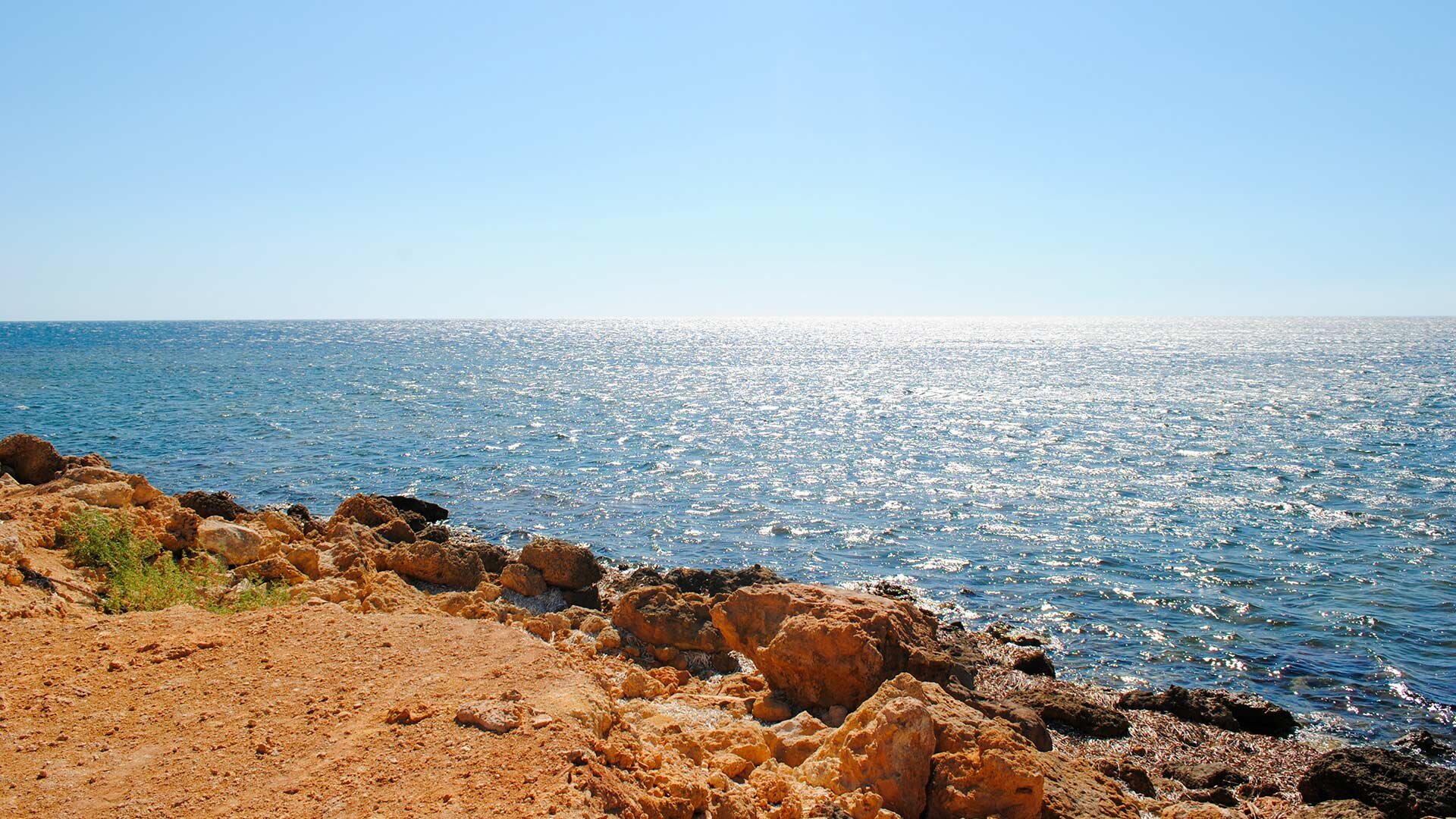
There is a stretch of Sicily where the land slips gently down to the sea with neither cliffs nor crags, in a long expanse of pale sand and shallow, turquoise water. This is the coast of Petrosino, the youngest town in the province of Trapani, founded only in 1980 when it broke away from Marsala: a place of sea and countryside, without grand monuments but with a light, a horizon and an authenticity that have been lost elsewhere.

Its very name tells of its bond with the sea: it is said to derive from the Latin sinus Petri, the "gulf of Peter", because tradition holds that it was here, in the bay of the Biscione, that Saint Peter came ashore. Today Petrosino is golden beaches, vineyards that yield grapes for Marsala, fishing boats, the silhouette of the Sibiliana Tower against the sunset and the nearness of the Stagnone and its salt pans just a few minutes away. A genuine Sicily, to be lived slowly.

"Gulf of Peter", from the Latin sinus Petri: the name of Petrosino preserves the memory of Saint Peter coming ashore on the beach of the Biscione.
— From local tradition

The youngest town in the Trapani area

Petrosino has a short administrative history but an ancient land. Until 1980 it was a hamlet of Marsala: in that year it gained its autonomy, becoming the youngest town in the province of Trapani. It lies between Marsala to the north and Mazara del Vallo to the south, on a fertile plain that slopes down to a low, sandy shore. You do not come here for baroque palaces or cathedrals, but for the slow rhythm of a farming and seafaring town, the greenhouses and vineyards, the low houses and the scent of salt air: the image of a true western Sicily, far from the beaten track.


The beaches and the sea of the Biscione

Petrosino's real treasure is its sandy coast: miles of golden shore and shallow, clear, warm water, perfect for families and for anyone who loves wading in. The best-known beaches are those of the Biscione, the Torrazza and the Sibiliana, with seabeds that shelve gently. Off the Biscione, however, the seabed grows more varied and drops to sixty metres: a paradise for diving, in a fish-rich sea where it is not rare to spot dolphins and Caretta caretta turtles, which choose these quiet shores to lay their eggs.

Biscione beach — a wide sandy bay with crystal-clear water, loved by families and divers alike.
Sibiliana Tower — a sixteenth-century square watchtower, the symbol of the town.
Torrazza beach — golden sand and shallow sea, among the most charming inlets of the coast.
Capo Feto and Margi wetlands — protected natural oases (SIC), a refuge for migratory birds.

Petrosino Petrosino

The Sibiliana Tower, sentinel over the sea

On Petrosino's shore stands the Sibiliana Tower, the town's emblem. It is a square watchtower, built of stone with tufa cornerstones, about twelve metres high, with thick walls and a battlemented crown. It belongs to the great system of coastal towers raised in Sicily during the fifteenth and sixteenth centuries to defend the shores from Barbary raids: from tower to tower, with optical signals, the alarm would race along the whole coastline. The Sibiliana also served as a "lighthouse" for the nearby tuna trap, signalling the passage of the tuna. Further inland, in the Ramisella countryside, another tower — the Galvaga — kept watch over the fields.


Vineyards, wine and country flavours

Behind the beach, Petrosino is countryside as far as the eye can see: rows of vineyards, greenhouses and vegetable gardens that make this one of the most fertile lands in the Trapani area. The grapes grown here help give life to the famous Marsala wine and to the wines of the territory, while the produce reaches markets across the province. It is a living farming vocation, celebrated at the end of summer with the Festa di Chianura, among folk groups, rural traditions and old-fashioned sweets. The sea completes the larder: fishing is still part of the economy and the landscape, and the fresh catch goes straight to the table, in dishes that are simple and deeply Mediterranean.


Just minutes from the Stagnone and the salt pans

Petrosino's location is one of its blessings: in a few minutes you reach some of the most iconic places in western Sicily. Just to the north, beyond Marsala, lies the Stagnone with its salt pans, windmills and the Phoenician island of Mozia: the lagoon where the sunset turns the water pink and gold is a sight famous the world over. Nearby too is Birgi, with Trapani airport, from which even scenic Piper flights set off over the Stagnone. And then Marsala, Mazara del Vallo and the Salt Road: Petrosino is the ideal base, quiet and by the sea, for discovering the whole west of the island.


When to go

Spring — the countryside is in bloom, the weather ideal for the sea and for walks; in late May comes the patronal feast of Maria SS. delle Grazie.
Summer — the season of the sea: golden beaches, swims in the shallows, diving off the Biscione and the Festa di Chianura with its country traditions.
Autumn — the grape harvest and the warm colours of the countryside, the sea still mild and the sunsets over the Stagnone just minutes away.
Winter — a mild climate, deserted and silent beaches, long walks along the shore and the most authentic, peaceful Petrosino.

Frequently asked questions about Petrosino

Where is Petrosino?

Petrosino lies on the south-western coast of the province of Trapani, between Marsala to the north and Mazara del Vallo to the south. It is a young town, founded in 1980 when it split from Marsala, facing a long, low, sandy shore.

What are Petrosino's beaches like?

They are sandy beaches, with shallow seabeds and clear water, ideal for families. The best known are the Biscione, the Torrazza and the Sibiliana. The Biscione shore is also a favourite with divers, with seabeds down to sixty metres and a fish-rich sea.

What is the Sibiliana Tower?

It is Petrosino's emblem: a sixteenth-century watchtower with a square plan, about twelve metres high, built to defend the coast from Barbary raids. It was part of Sicily's system of coastal towers and also signalled the passage of tuna to the nearby tuna trap.

Is Petrosino close to the Stagnone and the salt pans?

Yes. The Stagnone of Marsala, with its salt pans, windmills and the island of Mozia, is just a few minutes to the north, right beyond Marsala. Nearby is also Birgi with Trapani airport. Petrosino is a quiet seaside base for visiting all of western Sicily.

Can you experience Marsala wine in Petrosino?

Petrosino's countryside is covered in vineyards whose grapes help produce the famous Marsala wine and the wines of the territory. It is a land with a strong farming vocation, where you can discover wineries, vines and the genuine flavours of the Trapani countryside.

When should you go to Petrosino?

Summer is perfect for the sea and the beaches, while spring and autumn bring a mild climate, countryside in bloom or the grape harvest and fewer crowds. Even winter has its charm, with silent beaches and long walks along the shore.


Discover more

For institutional information, events and services for citizens and visitors, see the official website of the Comune di Petrosino.

Related content

Between Mount Bonifato and the sea, a mosaic of golden stone, vineyards and far horizons

Alcamo

A town that tells its story from the heights of its mountain and mirrors itself in the Gulf of Castellammare. Medieval castles, baroque churches and the bright fragrance of its most celebrated wine await those who choose to explore it slowly.

Buseto Palizzolo

A walk inside the scents and colors of a city garden.

Calatafimi Segesta

A Journey Through Time in the Heart of Sicily

Campobello Di Mazara

The dense foliage of centuries-old olive trees characterises the landscape of this town

The Arab-Norman port town overlooking the gulf, between the fortress by the sea, the sea stacks of Scopello and the Zingaro Reserve

Castellamare Del Golfo

A castle that has guarded the port since the Middle Ages, an old town climbing up from the sea in steps, the sea stacks of Scopello and the gateway to the Zingaro Reserve. Castellammare del Golfo is the fishing town where western Sicily, Mediterranean history and nature meet in a single view.

Castelluzzo

Small jewel that constitutes the wildest side of San Vito Lo Capo.

Castelvetrano

Pure uncontaminated nature

The marble town at the foot of Monte Cofano, between the sanctuary of the Madonna who arrived by sea and the living nativity of the Mangiapane Cave

Custonaci

A Marian sanctuary that guards a painting attributed to the school of Antonello da Messina, a troglodyte village where every Christmas the most evocative living nativity in Sicily comes to life, the Monte Cofano Nature Reserve and a hundred marble quarries. Custonaci is intimate, devoted western Sicily.

The medieval town suspended at 751 metres, between the temple of Venus and the cobblestone alleys overlooking the Mediterranean

Erice

A Norman castle built on the ruins of the temple of Venus Erycina, a medieval town of stone alleys vanishing into the mist, the view from the Balio Gardens all the way to the Egadi Islands. Erice is western Sicily seen from 751 metres up, where every century has left a tower.

Favignana

The largest of the Egadi islands

The town destroyed by the earthquake and reborn as an open-air contemporary art museum, between Burri's Cretto and the works of the great masters of the twentieth century

Gibellina

A town razed to the ground by the Belice earthquake and rebuilt as a single, immense work of art: the Stella di Consagra that serves as its gateway, the great white sphere of the Chiesa Madre, and a few kilometres away the Cretto di Burri, the concrete shroud enveloping the ruins of the old town. Gibellina, Italian Capital of Contemporary Art 2026.

Egadi

Favignana, Marettimo, Levanzo: the islands of treasures

Levanzo

Small and wild

Macari

Macari, along with Castelluzzo, is a fraction of San Vito Lo Capo.

Marettimo

Uncontaminated nature

Marsala

Wine, baroque art and windmills

The town where Sicily turns into Africa, among the Arab alleys of the Kasbah, the Dancing Satyr brought back from the sea and the largest fishing fleet in Italy

Mazara del Vallo

A maze of Islamic-flavoured alleys where Arabic still echoes, a Greek bronze fished up from the deep that dances alone in a museum, a Baroque cathedral grown over a mosque, and four hundred trawlers bringing home the famous red prawn every day. Mazara del Vallo is the point where Europe touches Africa.

Sicily's youngest municipality, a mosaic of hamlets among the salt pans, the golden beaches of Marausa and the sea-scented countryside south of Trapani

Misiliscemi

Born in 2021 from the union of eight ancient hamlets, Misiliscemi is not a town but a territory: the long beach of Marausa facing the Stagnone lagoon, the salt pans of Salinagrande, the farming districts with Arabic names and the airport that is the gateway to western Sicily. Authentic Sicily, the kind you live rather than visit.

Paceco

Windmills, salt flats, pink flamingos. It sounds like a movie, but it's all true

Pantelleria

The black pearl of the Mediterranean

Partanna

The medieval village surrounded by nature

Poggioreale

"The ruins that mark a people"

Zingaro Nature Riserve

The first nature reserve established in Sicily is an untouched paradise of cliffs plunging into the sea

Salaparuta

The sign of a violent earthquake.

The first capital of Italy for a single day, one of the most beautiful villages in Italy suspended over the hills of the Belice, between Garibaldi's castle, the ruins of the Mother Church an

Salemi

A Norman-Swabian castle where Garibaldi was the first to raise the Italian tricolour, making Salemi the first capital of Italy; a Mother Church reduced to an open-air stage set by the Belice earthquake and reinvented by Álvaro Siza; the Arab and Jewish alleys of the old town and the votive breads of San Giuseppe. Salemi is the Sicily of history and of bread.

A golden ribbon of sand between Monte Monaco and the Zingaro Reserve, where Sicily meets its most transparent sea

San Vito Lo Capo

Sicily's most photographed beach, a sanctuary-fortress that has watched over the village since the sixteenth century and one of the most enchanting nature reserves in the Mediterranean. San Vito Lo Capo is discovered slowly, barefoot between the white of the houses and the turquoise of the sea.

Santa Ninfa

A unique nature reserve

The sickle-shaped city stretching out between two seas, among salt pans dotted with windmills, the Misteri of Good Friday and the harbour from which you set sail for the Egadi

Trapani

A strip of land squeezed between two seas, salt pans that turn to gold and pink at sunset, windmills that grind PGI salt, the longest Misteri procession in Italy and the harbour from which hydrofoils depart for Favignana. Trapani is the beguiling, salt-tinged capital of western Sicily.

Valderice

A dip in the blue sea, a ride in the hills, 4 steps in history: the traveler's triathlon.

Vita

In the green lung of western Sicily: the Baronia forest.

We anticipate your questions

Plan your holidays

We designed this site to help you plan the perfect holiday.
Find all the information you need in one place. 
Have questions? Contact us directly for assistance.

Thank you

We’ve sent you an email. To activate the newsletter, click on the link you will find in the message. Thank you!

Something went wrong

Try again

Mistake