

locality
Custonaci

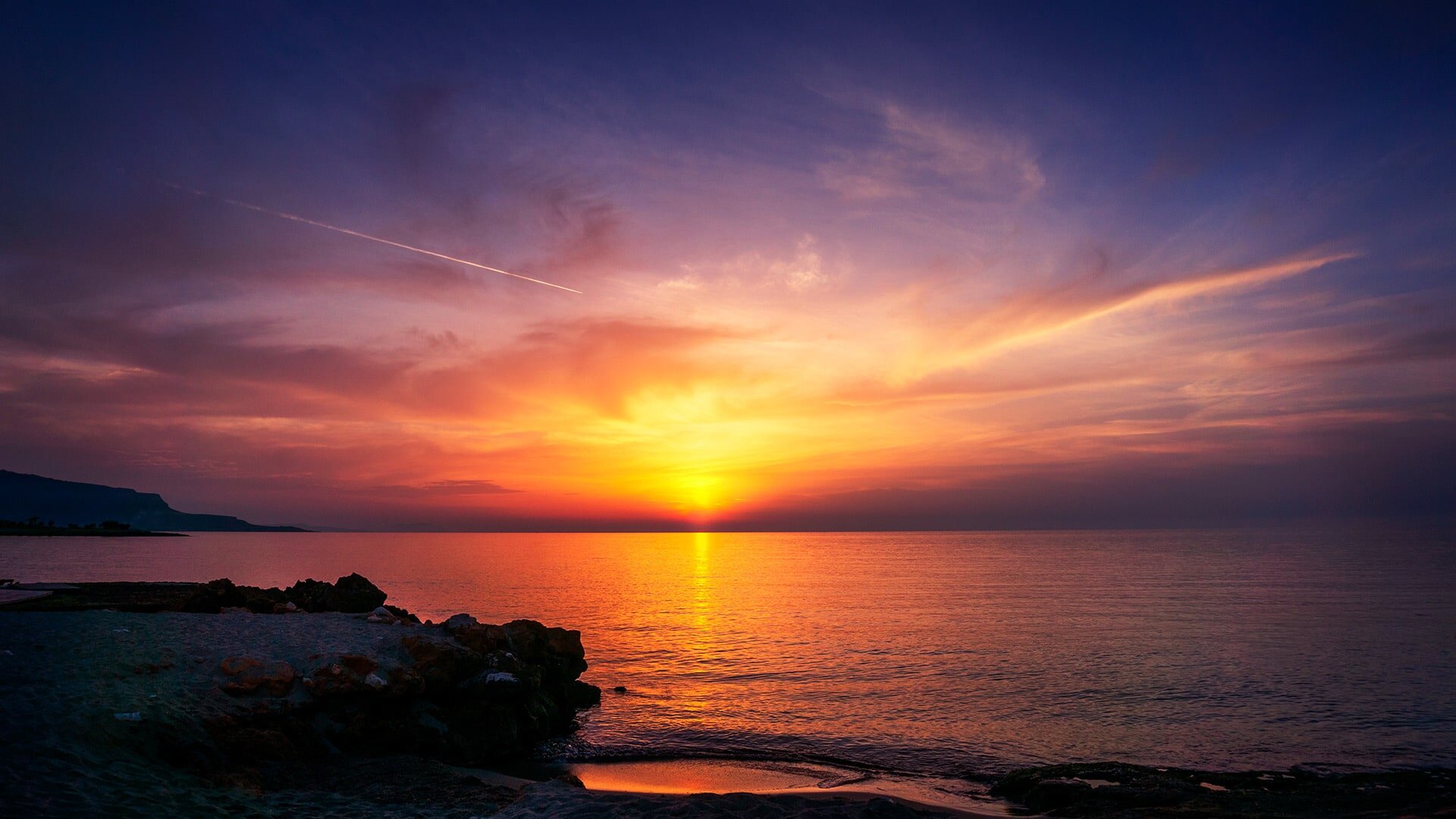
There is a mountain that plunges into the sea, a sanctuary surrounded by olive trees, a village carved into the rock where every Christmas a scene from two thousand years ago comes to life. Custonaci is all of this together: a small municipality in the Trapani area that seems suspended between Marian devotion, wild nature and the work of stone.
Until 1948 it was a hamlet of Erice. Then it became an autonomous municipality, keeping however the soul of its rural districts scattered between the sea and Monte Cofano. Today it is famous for three things: its Sanctuary, with the miraculous image of the Madonna who arrived from the sea; the Mangiapane Cave, where every December-January one of Italy's most celebrated living nativity scenes is staged; and its marbles, the famous Perlato di Sicilia that also adorns the Vatican palaces.
"The Madonna of Custonaci arrived from the sea, brought by a French ship in a storm that found refuge in the Cornino gulf."
— Local tradition
The Sanctuary and the Madonna who arrived from the sea
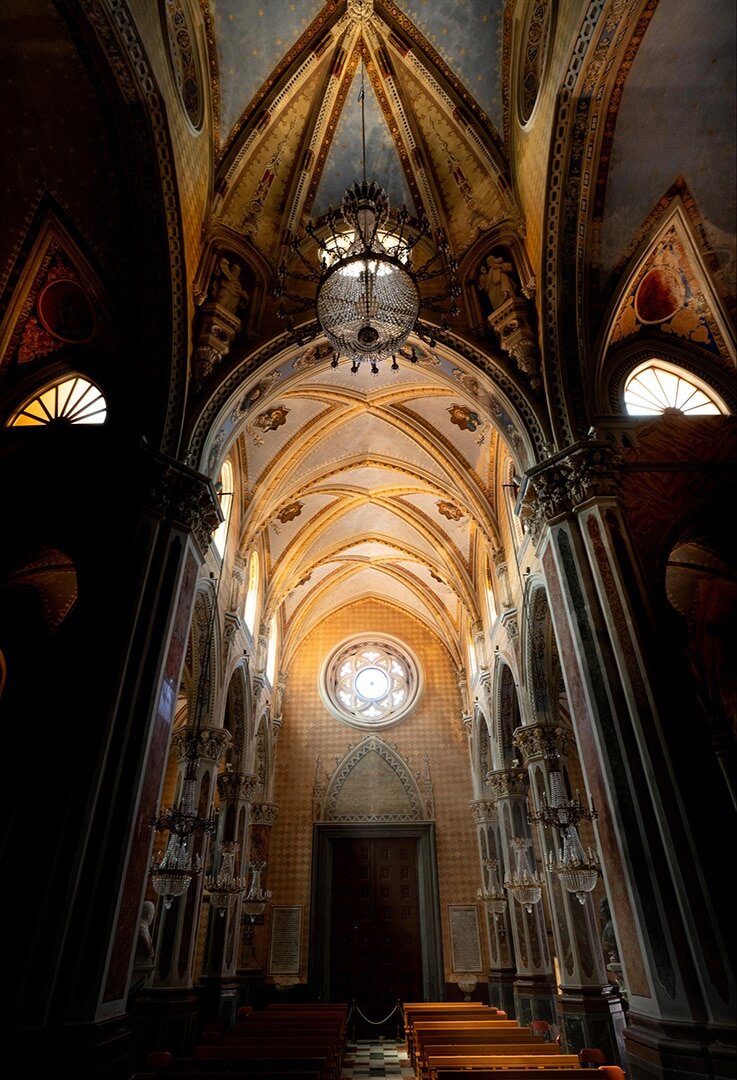
The Sanctuary of Maria SS di Custonaci was built around 1500 and preserves the miraculous painting of the Madonna and Child, oil on panel attributed to the school of Antonello da Messina. According to tradition, a French ship caught in a storm found shelter in the Cornino gulf carrying this sacred effigy; the community welcomed it and built a temple for it. In 1752 the Vatican Chapter — at the will of Pope Clement XIII — solemnly crowned it, making it one of the most venerated Marian images in all of western Sicily. The patronal feast on the last Sunday of August is still an occasion of great popular participation, with the procession of the statue through the town streets.
The Mangiapane Cave and the Living Nativity
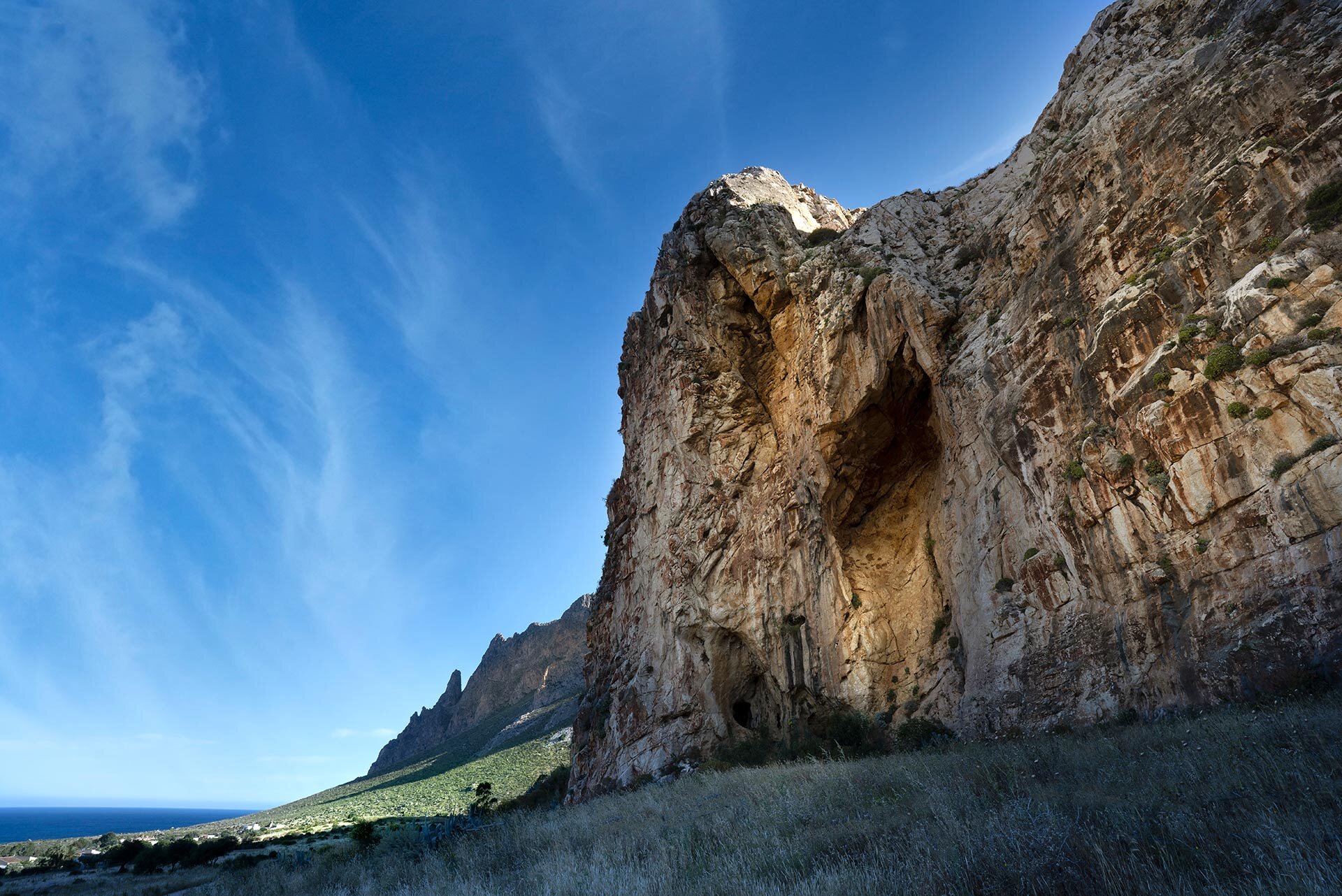
In the hamlet of Scurati, at the foot of Monte Cofano, opens the Mangiapane Cave — a troglodyte village inhabited until the twentieth century, with houses leaning against the rock wall, ovens, stables, an ancient oil mill. Since 1983 the Living Nativity has been staged here every Christmas, considered one of the most beautiful in Italy: over 160 figures in costume recreate among the cave-houses the trades of nineteenth-century rural Sicily — the baker, the blacksmith, the shepherd, the spinner — while the Nativity scene unfolds under the rock vault. It runs from December 26 to January 6, with atmospheric guided evening visits. For the rest of the year the Cave can still be visited as an archaeological and ethnographic site.


The Monte Cofano Nature Reserve
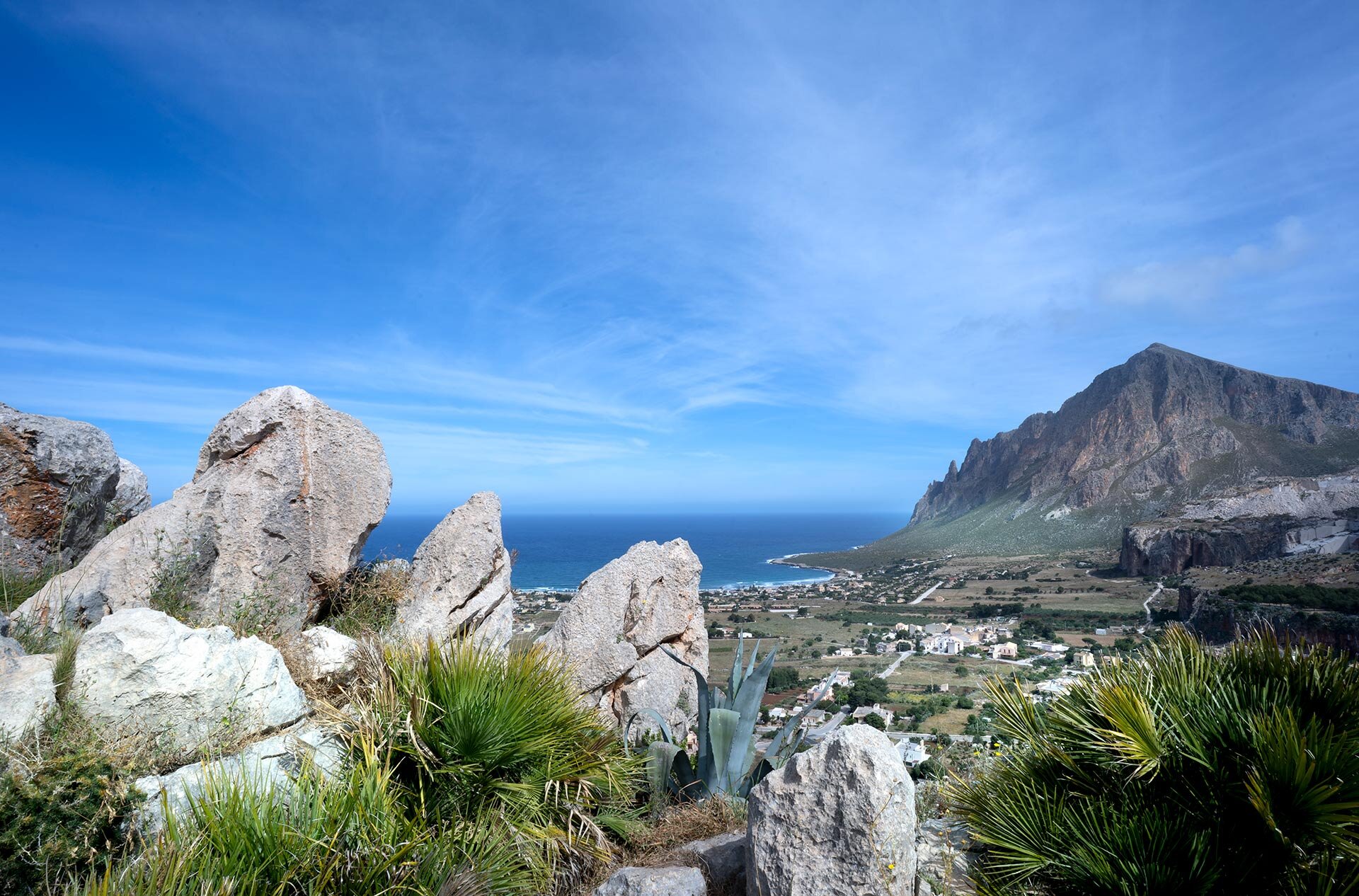
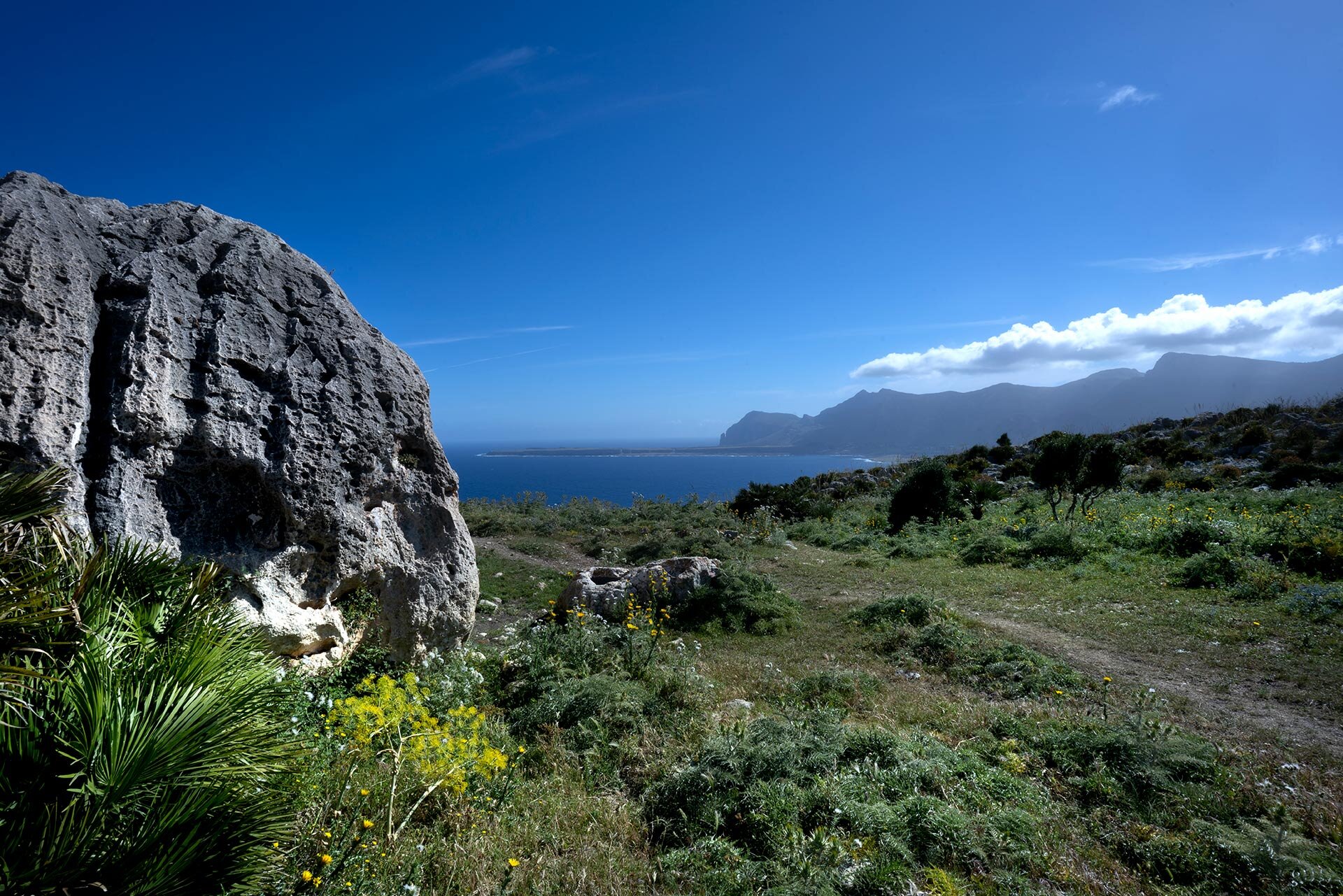
Monte Cofano (659 metres) is a limestone massif that plunges into the sea forming a spectacular promontory. The Nature Reserve that has protected it since 1997 offers one of the most beautiful coastal trails in Sicily: the Cofano loop (~6 km, an hour and a half) circles the mountain in a simple but beautiful path, with views over the Gulf of Bonagia, San Vito Lo Capo and the Egadi Islands. Mediterranean scrub scents of rosemary, dwarf palms and euphorbias; birds of prey nest in the upper part. Free entrance.
The beaches: Cornino, Santa Margherita, the Cofano coves
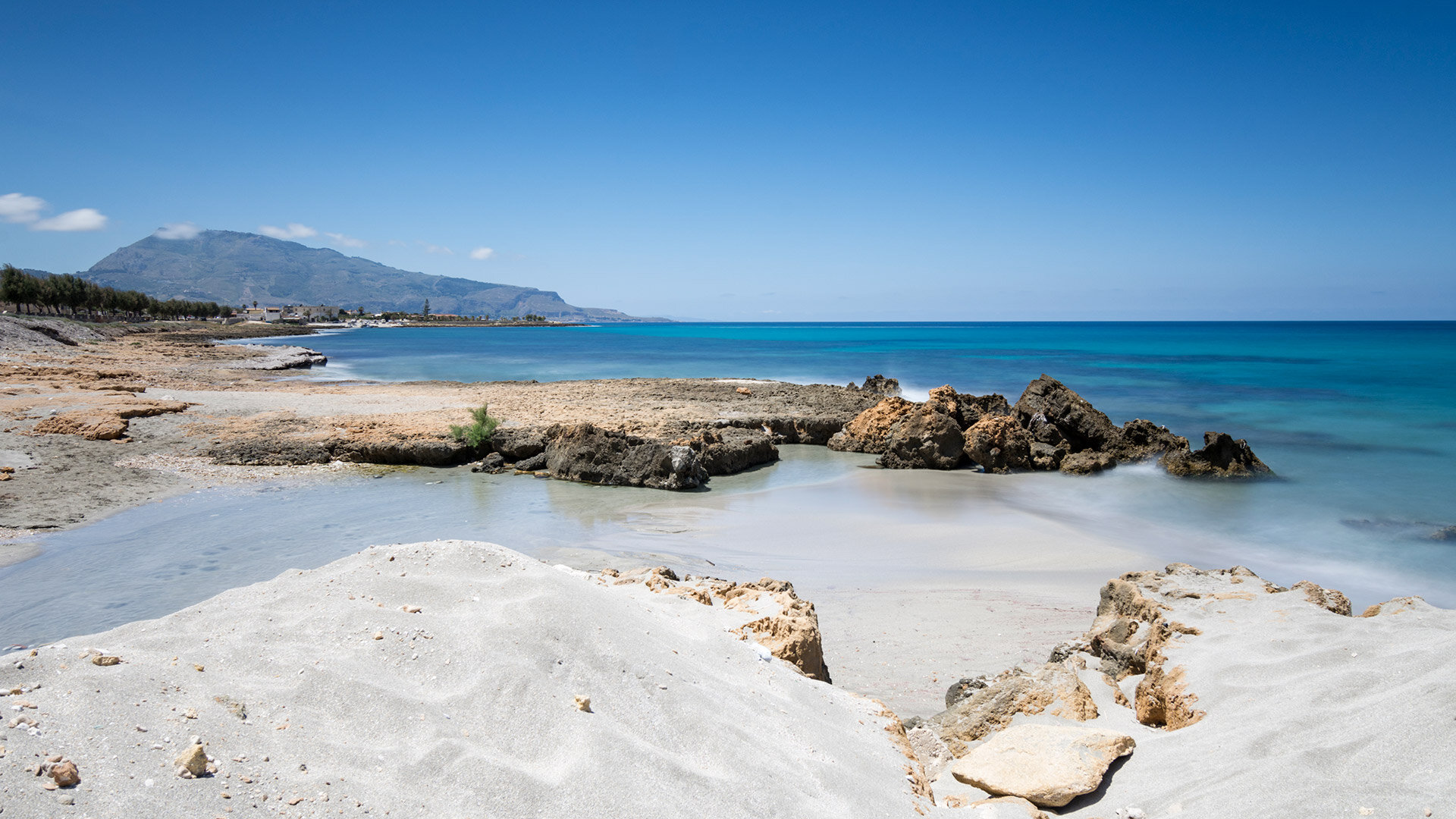
The coast of Custonaci offers different landscapes within a few kilometres.
Cornino Bay — recently entered in the National Register of Maritime Identities (REIMAR 2024) — is a small fishing village with a pebble and sand beach, clear water, authentic atmosphere. Santa Margherita Bay is sandier and better served, ideal for families. The steep coves of Cofano — Cala Bue Marino, Cala Buguto — can be reached only by a short walk and reward with crystal-clear waters and silence.
International city of marbles
Custonaci is officially the "International City of Marbles": its territory hosts the second marble basin in Europe, with about a hundred active quarries extracting the prized Perlato di Sicilia — marble with golden reflections used in Vatican monuments, in many luxury hotels and in international works. The Marble Museum, in the town centre, tells the evolution of extraction — from pickaxes to diamond wires — and the life of generations of quarrymen who built the economic identity of Custonaci.
When to visit
Frequently asked questions about Custonaci
How much time do I need for Custonaci?
For the Sanctuary, the Mangiapane Cave, a walk on Cofano and Cornino Bay you need at least a full day. Those who want to walk the complete Cofano loop and visit the Marble Museum, two days.
When is the Living Nativity at the Mangiapane Cave?
From December 26 to January 6. The Living Nativity of the Mangiapane Cave in Scurati has existed since 1983 and involves over 160 figures recreating scenes of nineteenth-century Sicilian rural life. Visits are guided, generally in the evening. Booking in advance is recommended.
How do I get to Custonaci?
From Palermo or Trapani take the A29 to the Castellammare del Golfo or Trapani exit, then provincial roads. From Trapani Birgi airport about 40 minutes; from San Vito Lo Capo about 25 minutes. There is no train station in the centre.
Can I visit the Monte Cofano Reserve?
Yes, entrance is free. The Cofano loop — about 6 km, modest elevation gain, one and a half hours — is within everyone's reach and offers spectacular views. Bring water, hiking shoes, hat (little shade).
What is Perlato di Sicilia?
It is the prized marble extracted from the Custonaci quarries — white with pearly reflections, in warm tones. Used in Vatican monuments, luxury hotels, public buildings in many countries. The Custonaci territory is the second marble basin in Europe.
When is the Madonna of Custonaci feast?
The last Sunday of August, with a procession of the Madonna statue through the town streets. It is one of the most heartfelt Marian feasts in western Sicily, with thousands of faithful also from neighbouring towns.
Discover more
For institutional information, Living Nativity schedule, Sanctuary hours and visitor services, please refer to the official website of the Municipality of Custonaci.
 Is not it what you were looking for? Review your choice


 Accommodation
 Event
Event
 All services
 How to get there
 Weather forecast