

locality
Valderice

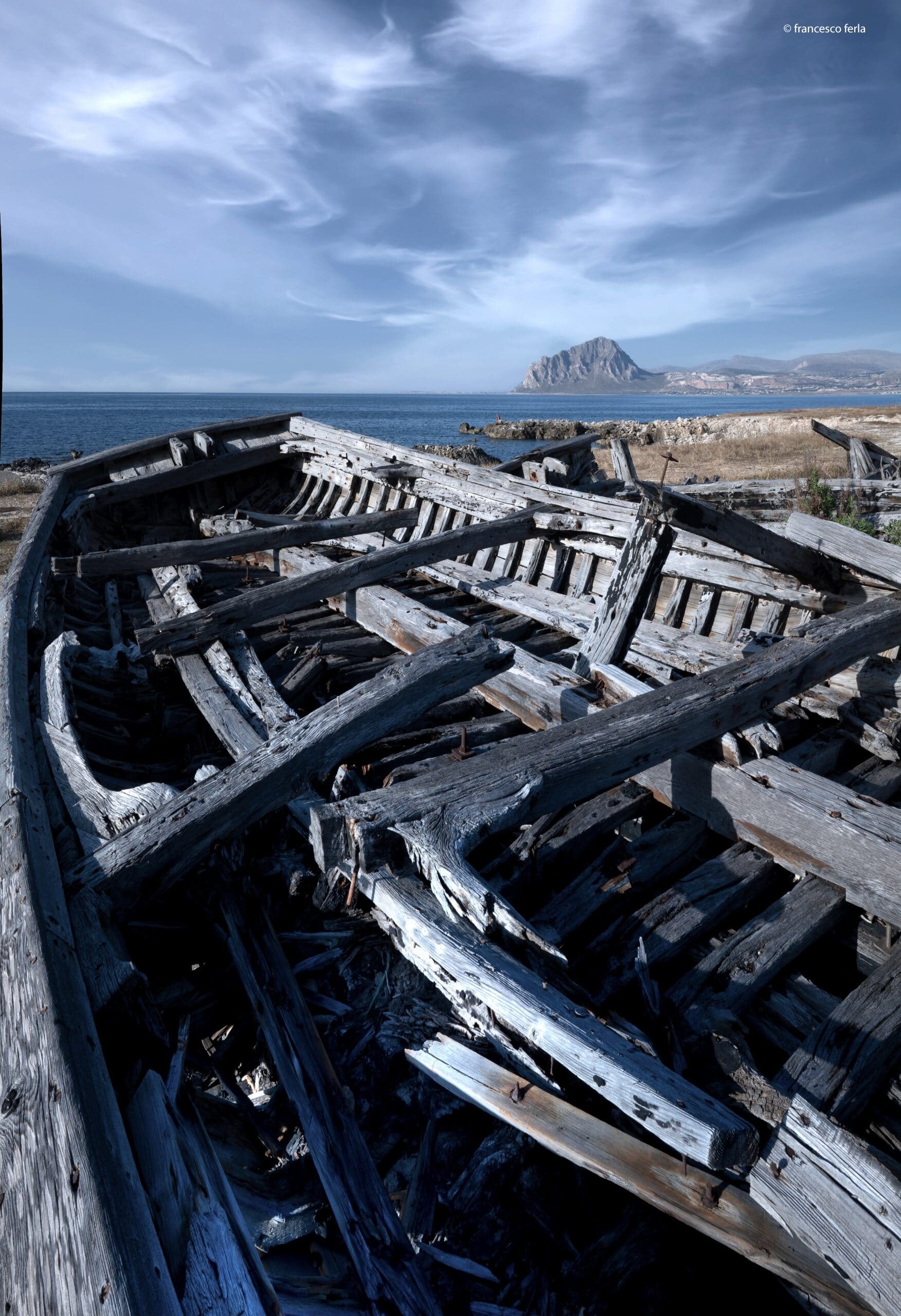
There is a town that stretches across the hills like a natural terrace, halfway between the sea of Trapani and the peak of Erice. From up here the eye roams freely: below lies the Gulf of Bonagia with its tuna fishery, opposite stands the profile of Monte Cofano, and in the distance the Egadi Islands seem to float on the water. This is Valderice: a green balcony overlooking western Sicily, made of hamlets, bagli and pine woods.
The last municipality to break away from ancient Erice, in the mid-twentieth century, Valderice gathers the rural soul of the Erice countryside — wheat, oil, wine, honey — and weds it to the sea of its fishermen. It is a land that does not shout, yet surprises those who cross it slowly: a scenic road, a tuna-fishery village, a mill turned museum, a pine wood with caves and an abandoned church.
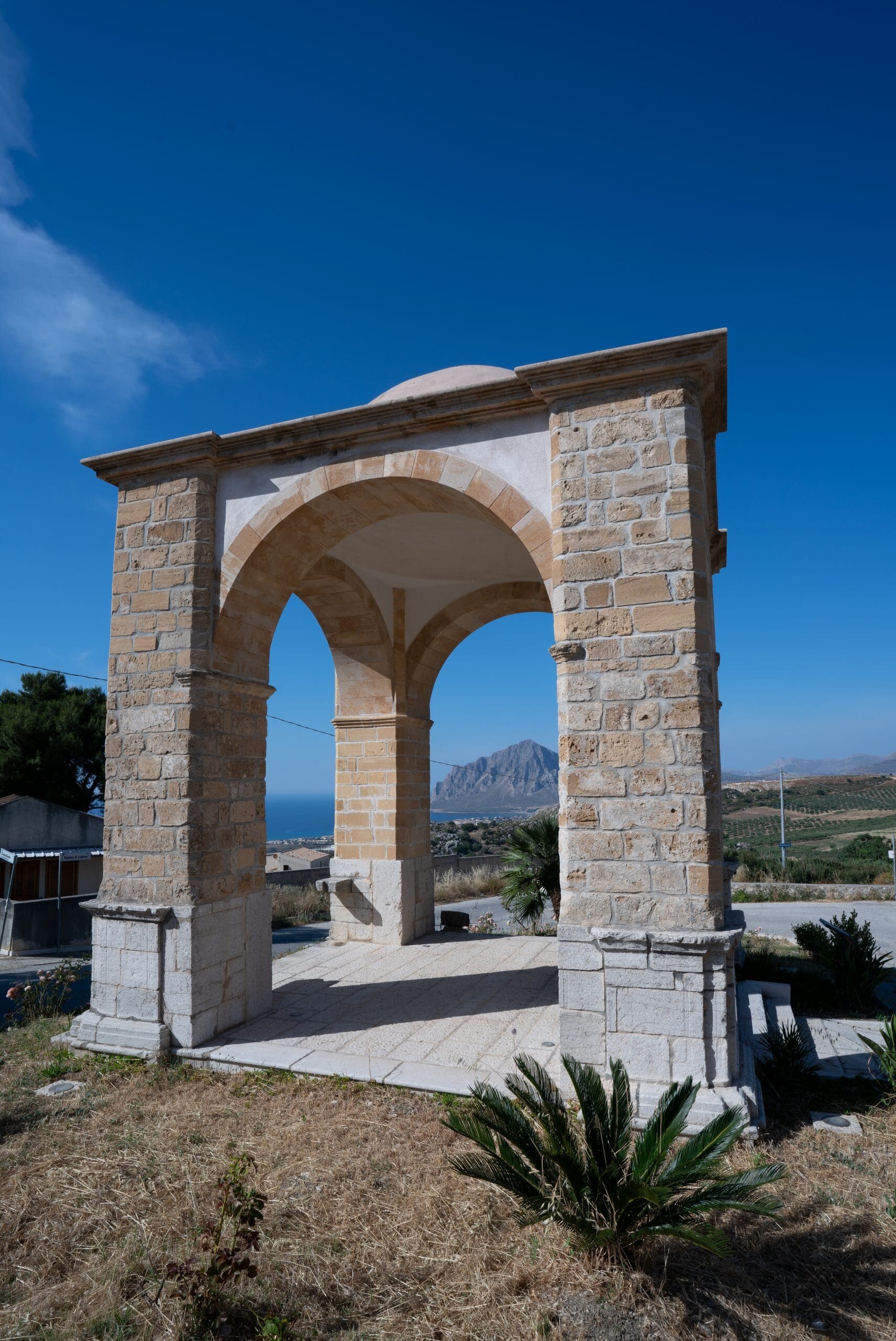
The town between sky and sea: the hills of Valderice offer a privileged vantage point over the gulf and the mountain of Erice.
— From travel accounts of the Erice countryside
The town between sky and sea
Valderice was born from the slow settling of the fertile districts below Monte San Giuliano, the mountain of Erice: hamlets such as San Marco, Ragosia, Misericordia, Sant'Andrea, Crocci and Crocevie that, one after another, came down from the summit toward the valleys. It was the last municipality to gain independence from Erice, in the mid-twentieth century, under the name Paparella-San Marco, before taking its present name of Valderice in 1958. At around 240 metres of altitude and only a few kilometres from the provincial capital, the town enjoys a rare panoramic setting: from the Misericordia urban park the view opens over the entire Gulf of Bonagia.
Bonagia, the Tonnara and the sea
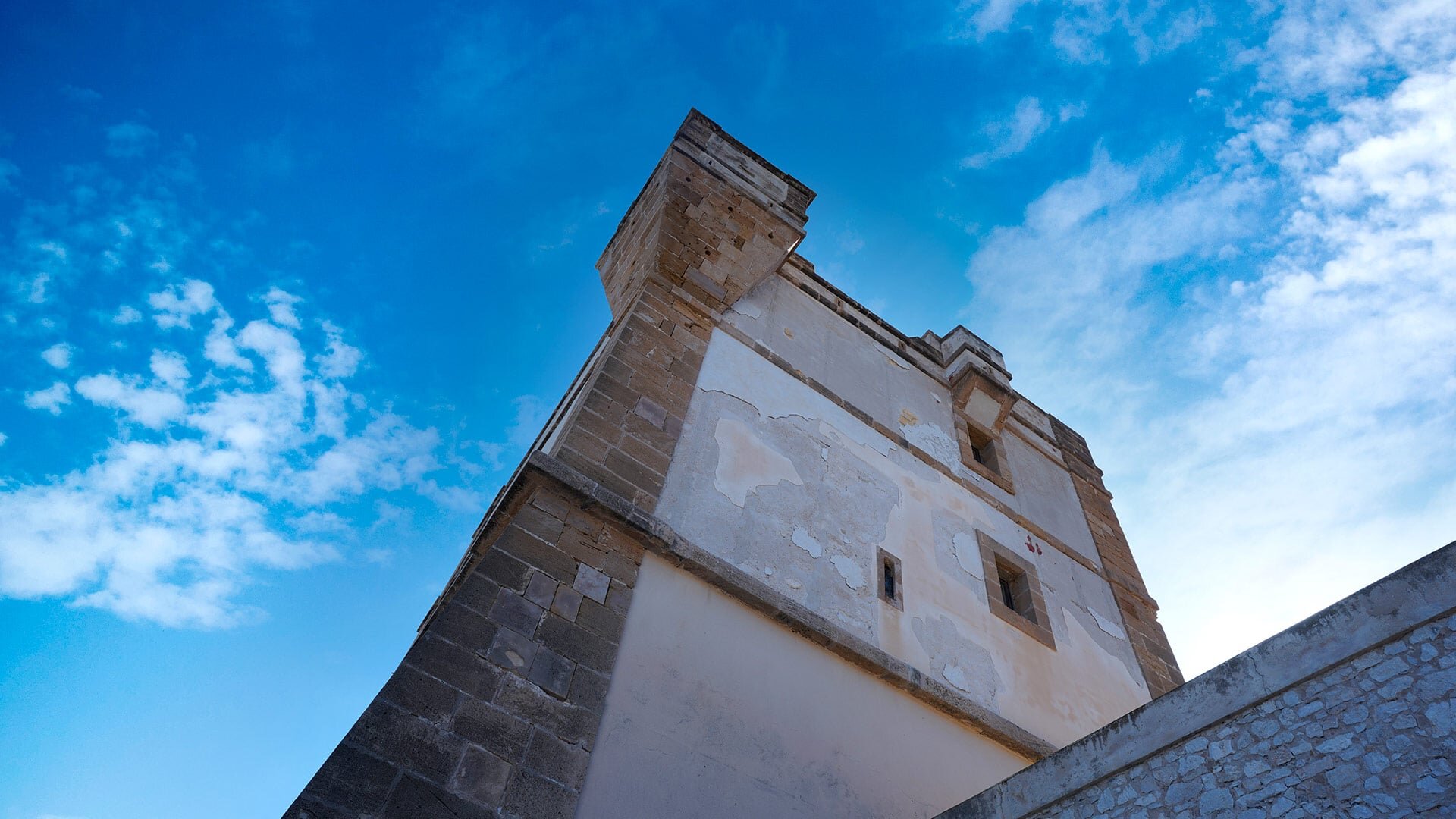
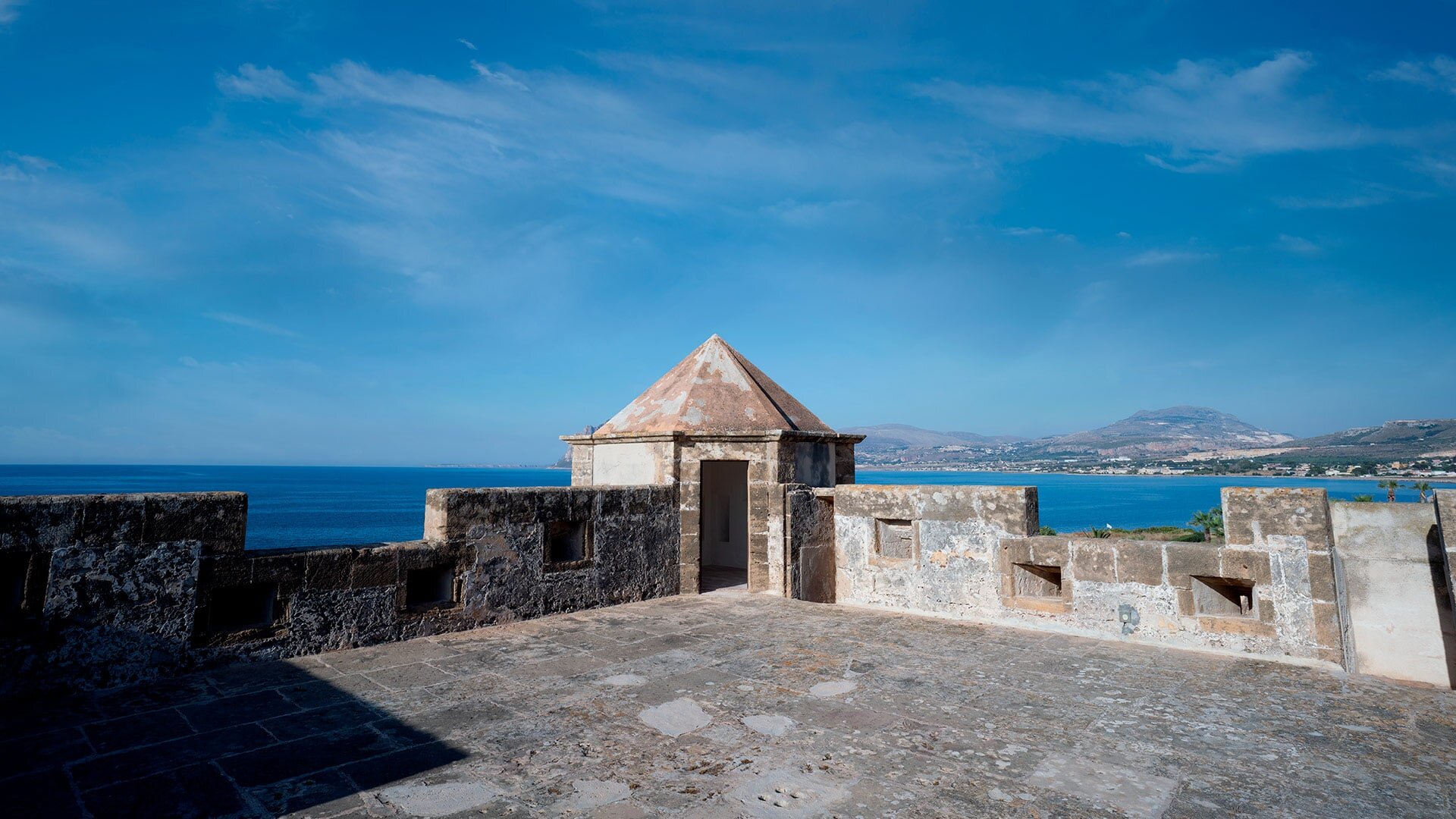
On the coast, just minutes from the town centre, lies the village of Bonagia, an old fishing settlement gathered around its tuna fishery. The Tonnara di Bonagia is one of the best-preserved historic plants in western Sicily: the tower, the house of the rais (the fishery's chief), the warehouses where the tuna was processed and the boats stored. The mattanza (the traditional tuna harvest) was practised here until 2003, and today the tower houses the Museum of the Tonnara and the Mattanza, with nets, tools, boats and a photographic exhibition recounting the stages of the fishing, set to the cialome, the fishermen's work songs. In the old chapel a wooden crucifix is kept, which the fishermen carry in procession once a year. All around are the beaches of Bonagia, Cortigliolo and Rio Forgia, a mix of sand, pebbles and clear water.


The Mulino Excelsior and the rural soul
In the heart of the town, the Mulino Excelsior tells of another Valderice, the one of labour and wheat. Started in 1904 by the entrepreneur Vincenzo Gervasi, it ground wheat until the 1960s; recovered as an example of industrial archaeology, it now hosts cultural and food-and-wine exhibitions. All around, the land is dotted with bagli — the typical fortified farmsteads with a large inner courtyard — and country villas, evidence of an old farming civilisation of oil, wine and honey. To wander among the districts of Valderice is to read this rural weave still alive today.
Monte Cofano, Cornino and the coast
Valderice is also the gateway to one of the island's most beautiful stretches of coast. Following the shoreline northwards, beyond Bonagia, you reach in a few minutes the Cornino Bay and the imposing Monte Cofano, a limestone headland now a Nature Reserve, with trails poised above the sea and views reaching as far as the Egadi Islands and San Vito Lo Capo. Inland, instead, just fifteen minutes by car take you up to the medieval town of Erice, perched on the mountain and also reachable by the nearby cable car from Trapani: sea and summit, both within sight from the same hillside terrace.
Flavours and traditions of the Erice countryside
The table of Valderice is the generous one of the Trapani hinterland, where land meets sea. From the countryside come extra-virgin olive oil, wine, honey and the old grains that become bread and sweets; from the Bonagia coast come fish and tuna, the living memory of the tonnara. Nor are the flavours shared across the whole Trapani area missing — fish couscous and busiate with Trapani-style pesto (tomato, almonds, garlic and basil) — along with almond pastries. A frank, honest cuisine, made of country produce and ancient gestures.
When to go
Frequently asked questions about Valderice
Where is Valderice?
Valderice is a hilltop municipality in the province of Trapani, a few kilometres from the provincial capital and about fifteen minutes from Erice. It lies halfway between the sea of the Gulf of Bonagia and the mountain of Erice, at around 240 metres of altitude, in a panoramic position.
What is the Tonnara di Bonagia?
It is an ancient tuna fishery on the Gulf of Bonagia, a coastal hamlet of Valderice. A well-preserved historic plant with tower, house of the rais and warehouses, it hosted the mattanza until 2003. Today the tower houses the Museum of the Tonnara and the Mattanza, devoted to tuna fishing.
What is there to see in Valderice?
Not to be missed are the Tonnara di Bonagia with its museum, the Mulino Excelsior of industrial archaeology, the Misericordia urban park with its gulf view and the Ragosia pine wood. Nearby lie Monte Cofano, Cornino Bay and the town of Erice.
Is Valderice good for the seaside?
Yes. The Valderice coast offers the beaches of Bonagia, Cortigliolo and Rio Forgia, with sand, pebbles and clear water, as well as panoramic rocky stretches. It is also an excellent base for reaching Monte Cofano, Cornino and the beaches of San Vito Lo Capo.
How far is Monte Cofano from Valderice?
A few minutes by car: following the coast northwards beyond Bonagia you reach Cornino Bay and Monte Cofano, a limestone headland protected as a Nature Reserve, with panoramic trails overlooking the sea.
What to eat in Valderice?
The cuisine blends land and sea: olive oil, wine and honey from the districts, bread and sweets made from grain, the fish of Bonagia. Typical of the Trapani area too are fish couscous and busiate with Trapani-style pesto (tomato, almonds, garlic, basil), along with almond pastries.
Discover more
For institutional information, museum opening hours, events and visitor services, consult the official website of the Municipality of Valderice.
 Is not it what you were looking for? Review your choice


 Accommodation
 Event
Event
 All services
 How to get there
 Weather forecast