

locality
Campobello di Mazara

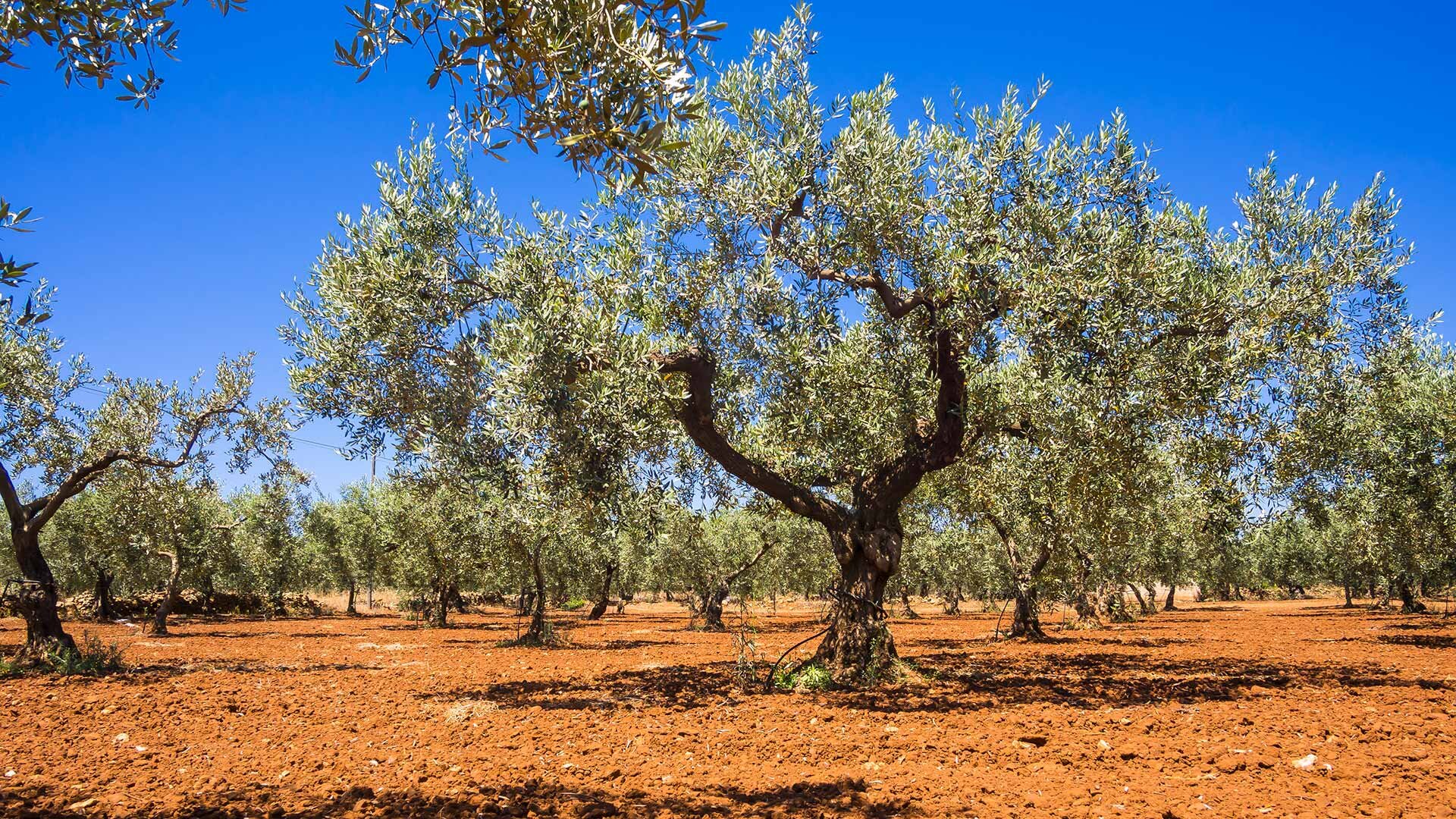
There is a town that seems made of olive and stone: the hills around Campobello di Mazara are a silvery sea of olive trees, and within the earth, a few kilometres from the coast, hides one of the most astonishing places in all of Sicily — a Greek quarry frozen mid-work, with the drums of its columns still attached to the rock after twenty-five centuries. We are in the heart of the Belìce Valley, between Castelvetrano, Mazara del Vallo and the ruins of Selinunte.
Campobello is two landscapes in one: the agricultural inland, birthplace of the famous Nocellara del Belice olive, and the coast, with the seaside hamlets of Tre Fontane and Torretta Granitola, their golden sandy beaches and the Capo Granitola lighthouse facing the Sicilian Channel. It is a place that tells of the most authentic Sicily — the one of the work of land and sea, far from the crowds — and that preserves, in the Cave di Cusa, one of the most moving testimonies of the Greek world.
Work stopped all at once in 409 BC, when Selinunte fell: the labourers laid down their chisels and the columns remained there, forever half-finished.
— From the history of the Cave di Cusa
The Cave di Cusa: the Greek quarry frozen in time
A few kilometres from the town lies the archaeological site of the Cave di Cusa, a great bank of calcarenite stretching for about two kilometres from east to west. From here, beginning in the 6th century BC, the people of Selinunte quarried the drums — the cylindrical sections — used to raise the gigantic columns of the temples of Selinunte, a dozen kilometres away. In 409 BC the Carthaginian attack overwhelmed Selinunte and the work stopped abruptly: since then the half-worked blocks have remained where they were, some still joined to the bedrock, others already detached and ready for transport. It is one of the very few ancient quarries "frozen" mid-production, where every stage of the Greek stonecutters' labour can still be read, carved into the stone.
Among olive groves and the Belìce Valley: the Nocellara
A sea of olive trees spreads around the town. It is here, in the Belìce Valley, that the Nocellara del Belice lives, one of Italy's most celebrated cultivars: a dual-purpose tree, giving both a fleshy table olive and an extra-virgin oil of great finesse. Since 1998 the territory has held two distinct European designations: the Nocellara del Belice DOP, for the green, fleshy table olives, and the Valle del Belìce DOP, for the extra-virgin oil obtained chiefly from this cultivar — fruity, with a peppery and slightly bitter finish. Campobello di Mazara lies, with Castelvetrano and Partanna, at the heart of the production area, and every year celebrates this vocation with an event dedicated to oil and olives.
The coast: Tre Fontane and Torretta Granitola
Towards the sea, the territory of Campobello descends into two seaside hamlets much loved by Sicilians. Tre Fontane is a long shore of golden sand and shallow, clear waters, ideal for families and for quiet summers. Further south, Torretta Granitola alternates rocky, jagged stretches with wide beaches, with the characteristic tuff formations overlooking the water. Here lies Capo Granitola, with its lighthouse, an old tuna fishery and a marine research station: the very name — from the Sicilian granitu — recalls the hard, rough rock of this coast exposed to the Sicilian Channel.
Selinunte, Mazara and south-western Sicily
The position of Campobello di Mazara is one of its fortunes: within minutes you reach Selinunte, one of the largest archaeological parks in Europe, where climbing among the Doric temples overlooking the sea ideally completes the visit to the Cave di Cusa from which their stones came. A little to the west is Mazara del Vallo, a city with an Arab-Norman soul, its Kasbah and the Dancing Satyr; to the north-east, Castelvetrano. Campobello is the ideal base from which to explore, at leisure, this less touristy and deeply Sicilian corner of the province of Trapani.
When to go
Frequently asked questions about Campobello di Mazara
What are the Cave di Cusa?
They are the ancient Greek quarries from which the people of Selinunte extracted the column drums for the temples of Selinunte. Active from the 6th century BC, they were abandoned all at once in 409 BC during the Carthaginian attack: the half-worked blocks still lie in situ, making the site a rare ancient quarry stopped mid-production.
How far are the Cave di Cusa from Selinunte?
The Cave di Cusa lie about a dozen kilometres from the ruins of Selinunte, within the territory of Campobello di Mazara. Many itineraries combine the two visits in the same day: the quarries where the columns were born and the archaeological park where the temples stand.
What is the difference between Nocellara del Belice DOP and Valle del Belìce DOP?
They are two distinct designations, both dating from 1998. The Nocellara del Belice DOP protects the table olive, green and fleshy; the Valle del Belìce DOP protects the extra-virgin oil obtained chiefly from the same cultivar. Campobello di Mazara falls within the production area of both.
What are the beaches of Campobello di Mazara?
The two main ones are Tre Fontane, a long stretch of golden sand with shallow, clear water, and Torretta Granitola, which alternates sandy beaches and rocky tuff stretches, with the Capo Granitola lighthouse. They are seaside spots loved by Sicilians, far from mass tourism.
What to see around Campobello di Mazara?
A few kilometres away are the archaeological park of Selinunte, with its Doric temples by the sea, and Mazara del Vallo, with its Kasbah and the Dancing Satyr. Neighbouring is Castelvetrano. It is an ideal base for discovering south-western Sicily, between archaeology, sea and countryside.
How much time do you need to visit Campobello di Mazara?
For the Cave di Cusa and a walk through town, half a day is enough. Adding a beach between Tre Fontane and Torretta Granitola, an oil tasting and nearby Selinunte, one or two days allow you to experience Campobello and its surroundings at a relaxed pace.
Find out more
For official information, opening hours of the Cave di Cusa site, events and visitor services, consult the official website of the Municipality of Campobello di Mazara.
 Is not it what you were looking for? Review your choice


 Accommodation
 Event
Event
 All services
 How to get there
 Weather forecast